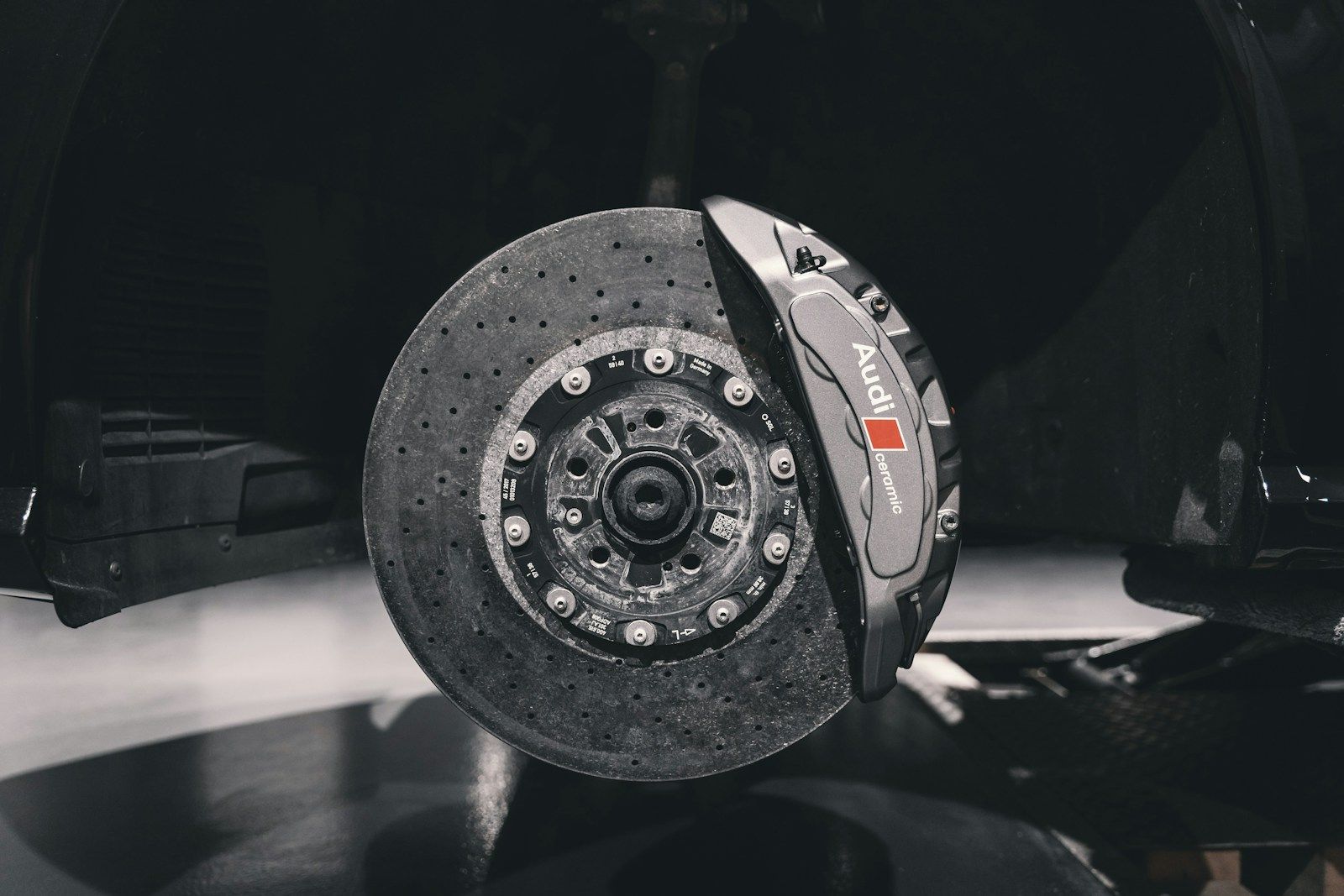
Resurfacing, also called turning or machining, is the cheaper alternative at about $15 to $40 per rotor. It is not always an option, and sometimes it is not worth doing. This page explains how to tell which one you need and how to avoid paying for rotors you do not need.
Replace or resurface: cost and conditions
| Option | Typical cost | When it fits |
|---|---|---|
| Resurface | $15–$40 per rotor (SlashGear) | Light scoring or glazing, rotor stays above minimum thickness |
| Replace, parts only | $30–$75 each (SlashGear, iSeeCars) | Below minimum, cracked, deeply scored, or badly warped |
| Replace, installed, one axle | $200–$400 (Jerry) | Same, with labor |
| Pads and rotors, one axle | $322–$586 (Jerry) | Usual shop job when rotors are replaced |
What changes the price
Rotor jobs vary by vehicle size, rotor type, and shop.
Vehicle and rotor type
A rotor for a 2015 Honda Civic is small and cheap. One for a 2018 Ford F-150 is bigger, heavier and costs more. iSeeCars says full-size SUVs and pickups cost a bit more than small sedans, and European performance cars such as BMW and Audi cost more again. Jerry says luxury, electric and performance vehicles run 25% to 100% higher on brake work, with some pad-and-rotor jobs above $900 per axle.
Coated rotors are marketed for rust resistance and cost more, which may be worth it where road salt is used. Performance rotors that are drilled or slotted also cost more and are rarely needed for a daily driver.
Shop type
Jerry puts dealerships 15% to 40% above independent shops, with labor at $100 to $200 per hour. AAA says labor rates vary widely by state.
Condition of the rest of the system
Stuck or corroded parts add $50 to $300 on Jerry's estimates. A caliper that drags or leaks is separate and costs more. A shop that finds one of those may recommend fixing it before the new rotors go on, and that is a fair call, since a sticking caliper will chew through new rotors.
How long rotors last
| Source | Rotor life |
|---|---|
| SlashGear | 30,000–70,000 miles |
| iSeeCars | 20,000–75,000 miles |
| SlashGear, resurfaced rotors | 30,000–70,000 miles |
What the sources say about vehicle type
| Vehicle | Effect on price |
|---|---|
| Economy sedans | Lowest end of the range |
| Full-size SUVs and pickups | A bit more than small sedans (iSeeCars) |
| European performance cars | More (iSeeCars); Jerry says $900+ per axle on some for pads and rotors |
| Luxury, electric, performance | 25%–100% higher on pad work (Jerry) |
Parts versus labor
A new rotor is not expensive. SlashGear lists $30 to $75 each, and iSeeCars cites the same range from AutoZone. eBay Motors lists a wider retail range of $75 to $275. For one axle you need two.
Labor is where most of the money goes. AAA says a brake job that includes rotors takes about two to three hours, versus about one hour for pads alone. Jerry says pads plus rotors takes 1.5 to 3 hours and adds $150 to $400 per axle over a pad-only job.
If a shop quotes $350 for a pair of rotors on a 2016 Toyota Camry, ask for the part price. A pair of standard rotors for a car like that should be a small piece of it. A big gap between the parts line and the total is the labor, and the question is whether it is reasonable for the hours. Compare against $80 to $300 per axle labor on Jerry's figures for a pad job, and the extra time for rotors.
Resurface or replace
Resurfacing shaves a thin layer off the rotor face to leave it flat and clean. SlashGear puts it at $15 to $40 per rotor. The catch is thickness. Every rotor has a minimum thickness stamped on it. After machining, it must still be above that number. If not, it has to be replaced.
GM's service bulletin, as covered by Jalopnik, says two things that matter here. Rotors that meet minimum thickness should not be replaced just because the pads were. And resurfacing can address pedal pulsation from warping, light scoring and glazing, unless the rotor is cracked. Rotors below minimum thickness, cracked or too warped to refinish should be replaced. BMW's guidance says pad replacement is prohibited on a rotor below minimum thickness.
The cost gap is small. New rotors at $30 to $75 each against $15 to $40 to resurface means some shops replace rather than machine, and that is a reasonable choice if the quote says so. It is not reasonable if the rotor measured fine and was fully usable with new pads. Ask for the numbers: the measured thickness and the minimum stamped on the rotor.
What resurfacing will not fix is a thin rotor. A rotor that is already near the minimum wears out quickly, and a second resurfacing is not an option.
What gets bundled with rotors
Almost every rotor job includes pads. Rotors and pads are a matched pair: a new pad on an old rotor surface can take longer to seat and may be noisy, and a new rotor with old, glazed pads is not good either. Jerry's estimate for pads and rotors is $322 to $586 per axle.
Other items that appear:
- Hardware clips and grease: Jerry lists $20 to $80 per axle for a hardware kit. Worth it if the old clips are rusted.
- Caliper slide pin service: $80 to $150 as a standalone job (Jerry).
- Brake fluid flush: iSeeCars adds $100 to $250 to its $350 per-axle average. Do it if due by your owner's manual. See the brake fluid flush guide.
- Caliper replacement: Only if a caliper is leaking or sticking. Jerry puts $250 to $600 per caliper installed. See the caliper guide.
For the combined job, see the pads and rotors guide.
Signs your rotors are done
SlashGear lists these warning signs: vibration or pulsing in the steering wheel or pedal when braking, squealing or grinding, visible grooves or scoring, heavy rust on the edges or friction surface, and bluish heat spots.
The pulsing is the one people notice. Jerry says rotor runout above about 0.004 inch can cause pulsation. You cannot measure that by eye. A shop with a dial indicator can.
AAA also notes that worn pads can score rotors, which raises the cost. If you hear grinding, stop driving on it for any longer than necessary and have the brakes inspected. A professional should handle any brake concern that affects stopping.
For most cars, rotor life is 30,000 to 70,000 miles by SlashGear's figure and 20,000 to 75,000 by iSeeCars. Many drivers go through two sets of pads on one set of rotors, but not all.
How to read the quote and avoid padding
Ask for these five items on every rotor quote:
- The measured rotor thickness and the minimum thickness stamped on it
- Whether the price is for one axle or both
- Rotor brand and type (standard or coated)
- Labor hours and hourly rate
- Warranty on parts and labor
A shop that recommends rotors based on the pad wear alone, with no measurement, is guessing. A shop that recommends them because the rotors are at minimum, cracked or deeply grooved, and shows you, is doing the job right. Jalopnik's summary of GM's guidance is a handy reference: do not replace rotors for cosmetic rust or because pads were replaced if the rotors meet spec.
Be skeptical of a quote that adds fluid flush, caliper replacement and a brake line inspection all at once, without a symptom to point to.
How a technician decides, and how you can check
A proper rotor decision takes about five minutes with the wheel off and two tools: a micrometer and, sometimes, a dial indicator.
The technician measures the rotor's thickness at several points and compares it to the minimum stamped on the rotor. SlashGear says the discard thickness is marked on the hub or the rim. If the number is at or below the minimum, the rotor is done. If it is above, the question is the surface: deep grooves, cracks, heavy bluing or a worn-in lip mean replacement, while light scoring or glazing can be resurfaced.
For pedal pulsation, Jerry says rotor runout above about 0.004 inch can cause it. That is measured on the car with a dial indicator. Some pulsation comes from rust or debris on the hub face rather than the rotor itself, which is why cleaning the hub matters on any rotor job.
You can do a rough version yourself. Look at the rotor through the wheel. A smooth, even surface with a thin edge lip is typical wear. Deep rings you can catch a fingernail in, cracks radiating from the holes or edge, or a blue tint are not. Take a photo and ask the shop about it by name.
What you are looking for in an honest recommendation is a number: thickness, minimum, and what the shop wants to do about it. GM's service bulletin, as summarized by Jalopnik, goes further: do not replace rotors for cosmetic rust, discoloration or a pulsation complaint if they meet the minimum thickness spec. A shop that recommends them anyway should be able to explain why, such as a crack or a measured problem. If the answer is that it is standard practice, you are free to ask for the cheaper option.
Hybrids, EVs and heavy vehicles
Vehicle type changes how long the rotors last. iSeeCars says regenerative braking extends pad and rotor life on hybrids and EVs, so these cars can go much longer between brake jobs. A 2019 Toyota Prius may need pads at a mileage that would be surprising on a conventional sedan.
Heavier vehicles go the other way. Full-size SUVs and pickups cost a bit more to service than small sedans per iSeeCars, and towing and mountain driving shorten brake life, per Jerry. A 2015 Ford F-150 that tows regularly may go through rotors faster than the 30,000 to 70,000 miles SlashGear gives as a typical range.
Driving habits matter as much as the vehicle. Stop-and-go city traffic, hard braking and downhill driving heat the rotor and wear it faster. Steady highway miles are easier on it. If your brakes are lasting less than the lower end of the range, it is worth asking what is wearing them, such as a sticking caliper or slide pin. Jerry says a dragging or leaking caliper adds $300 to $600 or more per corner, and a sticking one will wear through new rotors in short order.
Doing it yourself
Rotors at $30 to $75 each (SlashGear) mean $60 to $150 for a pair at the budget end. eBay Motors says DIY parts for pads and rotors run $35 to $175 per axle, and Jerry says DIY saves $80 to $300 per axle in labor.
The usual issue is a rotor stuck to the hub by rust. You may need a hammer, penetrating oil and patience. Clean the hub face before the new rotor goes on, since rust there causes runout and pulsing.
Brakes are safety equipment. If you are unsure about caliper bracket torque or bleeding, use a professional. After the job, pump the pedal until it is firm and test slowly in a safe place.
Sample invoice
Sample invoice: front rotors and pads on a 2017 Toyota Camry
- Front rotors, pair, standard
- $120
- Front brake pads, ceramic
- $85
- Hardware and grease
- $15
- Labor, 2.0 hours at $110
- $220
- Total
- $440
An illustration built from the ranges above, not a quote. Tax and shop fees are not included.
How to pay less
- Ask for the measured thickness and the stamped minimum before approving rotors.
- If the rotor is above minimum and the issue is light scoring or glazing, ask about resurfacing at $15–$40 per rotor.
- Choose standard rotors unless you live in a salt-heavy area.
- Replace pads on time so they do not score the rotors.
- Get a second written quote, especially at a dealer, which runs 15% to 40% higher on Jerry's numbers.
Questions owners ask
How much does it cost to replace rotors on one axle?
Jerry puts it at $200 to $400 installed for rotors alone. SlashGear says $250 to $500 per axle including labor. Add pads and Jerry's figure becomes $322 to $586.
Can brake rotors be resurfaced?
Yes, if they stay above the minimum thickness stamped on them after machining and are not cracked. SlashGear puts the cost at $15 to $40 per rotor.
Do I need new rotors with new pads?
Not always. GM's service bulletin, summarized by Jalopnik, says rotors that meet minimum thickness should not be replaced just because pads were. Many shops replace them anyway, so ask for the measurement.
How long do rotors last?
SlashGear says 30,000 to 70,000 miles; iSeeCars says 20,000 to 75,000. Driving style makes a large difference.
Why do my brakes pulse after new pads?
Uneven rotor thickness or runout can cause pedal pulsation. Jerry says runout above about 0.004 inch can do it. Rust on the hub face can also cause it. Take it back to the shop that did the job.
Do I need to replace both rotors on an axle?
Yes. Rotors are replaced as a pair on an axle so the two sides brake evenly.
Sources
- How Much Does Brake Pad Replacement Cost?, Jerry, checked November 23, 2026rotor replacement range, pads plus rotors, labor, dealer markup, runout threshold
- How Often Your Brake Rotors Need Replacing, SlashGear, checked November 23, 2026rotor life, part price, resurfacing cost, warning signs
- Cost of Brake Pads and Rotors, iSeeCars, checked November 23, 2026rotor price per AutoZone, vehicle-type notes, rotor life, fluid add-on
- Brake Pad and Rotor Replacement Costs: What to Expect, eBay Motors, checked November 23, 2026retail part price range, DIY parts per axle
- How much to replace brake pads, AAA, checked November 23, 2026rotor replacement hours, scoring warning, regional labor note
- When To Resurface Brake Rotors, And When You Should Just Replace Them, Jalopnik, checked November 23, 2026GM and BMW minimum-thickness and resurfacing guidance