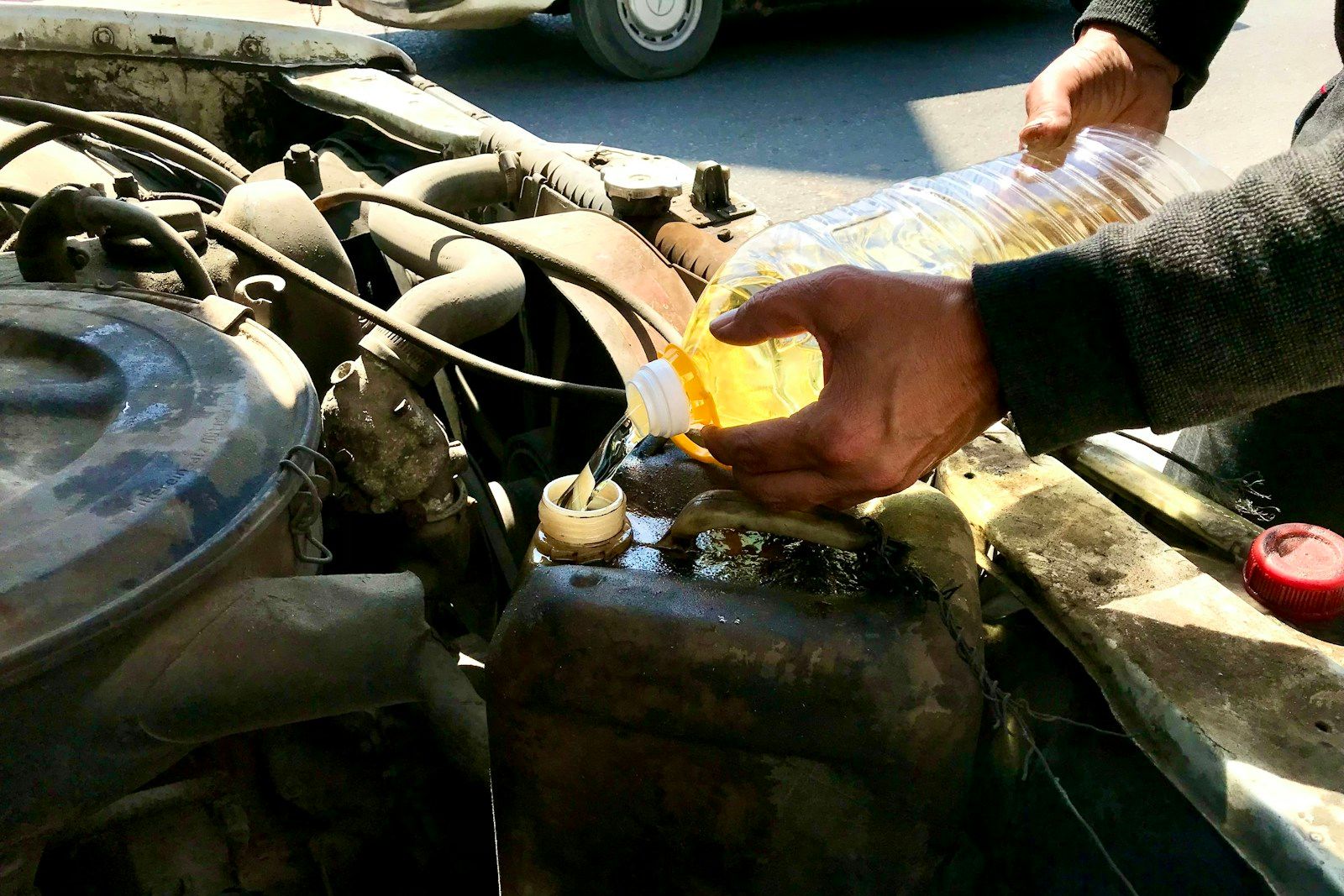
The fluid costs around $10 to $30. The rest is labor. It is also one of the most debated services in car maintenance, because some manufacturers call for it every two to three years and others barely mention it. This page covers the price, how often it is actually due, and how to avoid paying for it too soon.
Brake fluid flush cost by source
| Source | Cost | Notes |
|---|---|---|
| Jerry, independent shops | $110–$160 | Standard flush with full bleed |
| Jerry, dealerships | $140–$220 | Same service |
| Jerry, other estimate page | $80–$205 | Headline range |
| iSeeCars | $100–$250 | Added on top of a pad-and-rotor job |
| eBay Motors | $70–$150 | About $10–$30 fluid plus $60–$120 service |
What changes the price
Four things matter: the shop type, the vehicle, the fluid, and the extras.
Shop type
Jerry puts a standard flush at $110 to $160 at an independent shop and $140 to $220 at a dealer. Another Jerry page says dealerships often cost more than independents, and urban shops more than rural ones. Labor rates range from $90 to $180 per hour, higher in urban and coastal areas.
Vehicle
Performance and luxury cars with sophisticated ABS or stability systems add 20% to 50%. Larger systems on trucks and SUVs add $15 to $60. Some cars need a scan tool to cycle the ABS pump during the bleed, which Jerry puts at $30 to $120 in labor.
Fluid type
Most cars use DOT 3 or DOT 4. Jerry says a switch to DOT 4 or DOT 5.1 from DOT 3 adds $10 to $30. eBay Motors says to use only DOT 3, DOT 4 or DOT 5.1, and to follow the owner's manual. Jiffy Lube notes that the DOT number is often embossed on the reservoir cap. A DOT 5 silicone fluid cannot be mixed with the others, according to Jerry's other page, and glycol-based fluids (DOT 3, 4, 5.1) absorb water while silicone-based DOT 5 does not, per Jiffy Lube.
Extras
Rusted or seized bleeder screws add $100 to $400 in labor on Jerry's list. If the shop finds contaminated pads or needs to replace pads or rotors, Jerry says that can add $200 to $600 when bundled. Flushing along with new pads can reduce labor, since the system is already open, per Jerry's other page.
What adds to the price
| Item | Extra cost |
|---|---|
| Performance or luxury car, complex ABS | +20%–50% |
| Larger system (trucks, SUVs) | +$15–$60 |
| Fluid upgrade to DOT 4 or DOT 5.1 | +$10–$30 |
| ABS service bleed with scan tool | $30–$120 labor |
| Rusted or seized hardware | $100–$400 labor |
DIY vs shop
| Route | Cost | Time |
|---|---|---|
| DIY, fluid only | $10–$30 (Jerry); $20–$70 total (eBay Motors) | 1–2 hours |
| DIY tools, if needed | $30–$100 (Jerry); $20–$200 (eBay Motors) | One-time |
| Shop | $70–$220 depending on source and shop type | 0.5–1 hour |
Parts versus labor
This is mostly a labor charge. eBay Motors puts fluid at about $10 to $30 and the service at $60 to $120 at a shop, for a total of roughly $70 to $150. Jerry says fluid for DIY runs $10 to $30. A shop's flush takes 0.5 to 1 hour by Jerry's estimate, longer if repairs are needed.
The work is straightforward but methodical. The technician removes old fluid from the reservoir, then opens each bleeder screw in sequence and pushes new fluid through until it runs clean. Some shops use a pressure bleeder, some a vacuum pump, and some a scan tool for the ABS module.
When you see a price above $200 for a simple flush on a mainstream car, ask what is in it. Jerry puts the dealer high end at $220. A complex vehicle can justify that. A 2015 Honda Accord does not.
How often is it really due
Brake fluid absorbs moisture over time. Jerry says it is hygroscopic, which lowers its boiling point. Moisture can cause a soft pedal under hard braking and, over years, internal corrosion. That is the reason for the service.
Intervals vary. Jerry says many automakers call for every two to three years and European brands typically two. Jiffy Lube says some call for two years or 24,000 miles and others three years or 36,000 miles. A Subaru's owner's manual, according to another Jerry page, says every 30,000 miles or three years. eBay Motors gives 30,000 to 45,000 miles or two to three years. iSeeCars says about every 30,000 miles.
Your owner's manual is the authority. Some manufacturers publish no interval at all, in which case a visual check is reasonable. Fresh fluid is amber and darkens to brown as it ages, according to eBay Motors. A moisture test strip or tester, which some shops use, gives a number instead of a guess.
Sooner is better in humid climates, if you tow, or if you drive hard, per Jerry. Hybrids and EVs still need it, per iSeeCars.
When a flush is a real need and when it is an upsell
A flush is a real need when:
- It is due per your manual
- The fluid is dark or tests wet
- You are replacing a caliper, hose or other part that opens the system, in which case at least a bleed is needed
- The pedal feels soft and there is no leak
It is more likely an upsell when:
- The shop adds it to every oil change or tire rotation without looking
- The car is a few years old with low miles and the manual says nothing
- You are told it is needed every year
Jerry says a sinking pedal or suspected leak means the car should be towed, not driven. That is a different problem, a leak or failed component, and Jerry puts it at $250 to $1,500 or more. A fluid flush does not fix it. A flush will not rescue brakes that are leaking or worn. If the pedal is soft, have a professional inspect the brakes before you drive far.
Bundling with other brake work
Flushing fluid while the pads are being replaced can save labor, since the wheels are already off. Jerry says bundling with other services, such as a scheduled maintenance package, can lower the total. iSeeCars adds $100 to $250 to its $350-per-axle estimate for a pad-and-rotor job.
A pad or rotor job on its own does not need a flush unless one is due. See the brake pad cost guide and the pads and rotors guide for those. A caliper replacement does need a bleed, per Jerry, which is a smaller job than a full flush. See the caliper guide.
Fluid types and why the cap matters
Brake fluid comes in several grades, and the grade matters more than the brand. eBay Motors lists DOT 3, DOT 4, DOT 5 and DOT 5.1, but says to use only DOT 3, DOT 4 or DOT 5.1, whichever your manual calls for. Jiffy Lube says the DOT number is often embossed on the reservoir cap, and your owner's manual is the fallback if it is missing.
Here is what the sources say about mixing. Glycol-based fluids (DOT 3, 4 and 5.1) absorb water, per Jiffy Lube, while silicone-based DOT 5 does not. Jerry's other page says to mix only by moving to a higher grade, never to a lower one, and that DOT 5 cannot be mixed with the other types. A shop should not put DOT 5 in a car that is specified for DOT 3 or 4.
On price, DOT 3 is the baseline. Jerry says moving up to DOT 4 or DOT 5.1 adds $10 to $30 to the job, and Jiffy Lube notes DOT 5 costs more than DOT 3 or DOT 4. Paying extra for a higher grade is not a problem if your car calls for it. If it does not, it is optional and the benefit is small for normal driving.
One practical thing to ask: which fluid are you putting in, and is that what the manual specifies? A good shop answers without hesitation. If the answer is that they use universal fluid, ask what that means.
Old fluid versus a leak or failure
A flush solves one problem: old, wet fluid. It does not fix a leak, a failing master cylinder or a worn pad, and a shop that treats it as a cure-all is selling the wrong thing.
Here is the difference. If the pedal slowly gets soft over months or years, and the fluid in the reservoir is dark, age is a likely cause and a flush is reasonable. If the pedal sinks to the floor, the reservoir level drops, or there is a wet spot at a wheel, that is a leak or component failure. Jerry says a sinking pedal or suspected leak means the car should be towed, not driven, and puts that kind of repair at $250 to $1,500 or more.
Jerry lists some of the related parts a leak might involve: a wheel cylinder at $150 to $300 each, a master cylinder at $250 to $550 installed, a rubber hose at $150 to $300 per corner and a steel brake line at $150 to $400, with full-line replacement over $800 in rust-belt areas. An ABS control unit runs $800 to $1,500 or more. None of those are fluid flush problems.
Jiffy Lube makes a related point: contaminated fluid can cause internal corrosion and rust, which may lead to repairs costing several hundred or thousand dollars. That is the argument for following your interval. A flush at $110 to $160 is cheap compared with that. It is also the argument against overdoing it, since doing it every year when your manual says three is paying for something you do not need.
If you are unsure, a moisture or boiling-point test gives a number to base the decision on. Ask the shop for the result. If the pedal feels wrong, have a professional inspect the system before you drive any distance.
Doing it yourself
eBay Motors puts DIY fluid at $10 to $20 per 16-ounce bottle, with most cars needing one to two bottles, and total cost at $20 to $70 plus $20 to $200 for tools if you need them. Jerry says $10 to $30 for fluid and $30 to $100 for tools, and 1 to 2 hours for the job.
The key rules: use the DOT grade your manual and reservoir cap specify, never let the reservoir run dry, work from the bleeder farthest from the master cylinder inward, and keep fluid off the paint. Jerry's other page says mix fluid types only by moving to a higher grade, never lower, and that DOT 5 cannot be mixed with the others.
On cars with ABS, some require a scan tool to cycle the pump. If the pedal is soft afterward, air is in the lines. Brakes affect safety, so have a professional bleed it.
Sample invoice
Sample invoice: brake fluid flush on a 2016 Toyota Camry at an independent shop
- DOT 3 brake fluid, about two bottles
- $20
- Flush and bleed labor, 0.8 hour at $115
- $92
- Shop supplies
- $10
- Total
- $122
An illustration built from the ranges above, not a quote. Tax is not included.
How to pay less
- Check your owner's manual for the interval before agreeing to a flush.
- Ask for a moisture test or to see the fluid instead of taking the shop's word.
- Combine it with pad or caliper work to save labor, but only if it is due.
- Compare a dealer quote ($140–$220) with an independent shop ($110–$160).
- Use the fluid grade your manual specifies; do not pay extra for DOT 5.1 unless it is called for.
Questions owners ask
How much does a brake fluid flush cost?
Jerry puts it at $110 to $160 at independent shops and $140 to $220 at dealers. eBay Motors says $70 to $150. Complex vehicles run higher.
How often should I flush brake fluid?
Follow your owner's manual. Many automakers call for every two to three years, and some European brands two. Others give mileage intervals such as 24,000 to 36,000 miles.
Is a brake fluid flush the same as a bleed?
Close. A bleed removes air and a little fluid from the system. A flush replaces most or all of the fluid. Jerry lists bleeding after opening a circuit at $70 to $150 on its caliper page.
Can I use any brake fluid?
No. Use the DOT type in your manual or on the reservoir cap. eBay Motors says use only DOT 3, DOT 4 or DOT 5.1. DOT 5 silicone cannot be mixed with the others.
Do electric cars and hybrids need brake fluid changes?
Yes. iSeeCars says brake fluid changes still apply to hybrids and EVs.
How do I know my brake fluid is bad?
Dark brown fluid, a soft or spongy pedal, a burning smell when braking, and slower stopping are signs, per eBay Motors. A moisture test is more reliable than color.
Sources
- How Much Does a Brake Fluid Replacement Cost?, Jerry, checked November 23, 2026flush cost by shop type, add-ons, labor rates, interval, DIY fluid and tools
- Brake Fluid Replacement Cost, Jerry, checked November 23, 2026$80–$205 range, Subaru interval, DOT mixing rules, bundling note
- When to Replace Your Brake Fluid, eBay Motors, checked November 23, 2026interval, fluid color, DIY and shop costs, warning signs
- Brake Fluid Change Cost, Jiffy Lube, checked November 23, 2026manufacturer interval examples, DOT cap marking, moisture facts
- Cost of Brake Pads and Rotors, iSeeCars, checked November 23, 2026$100–$250 fluid add-on, interval, hybrids and EVs