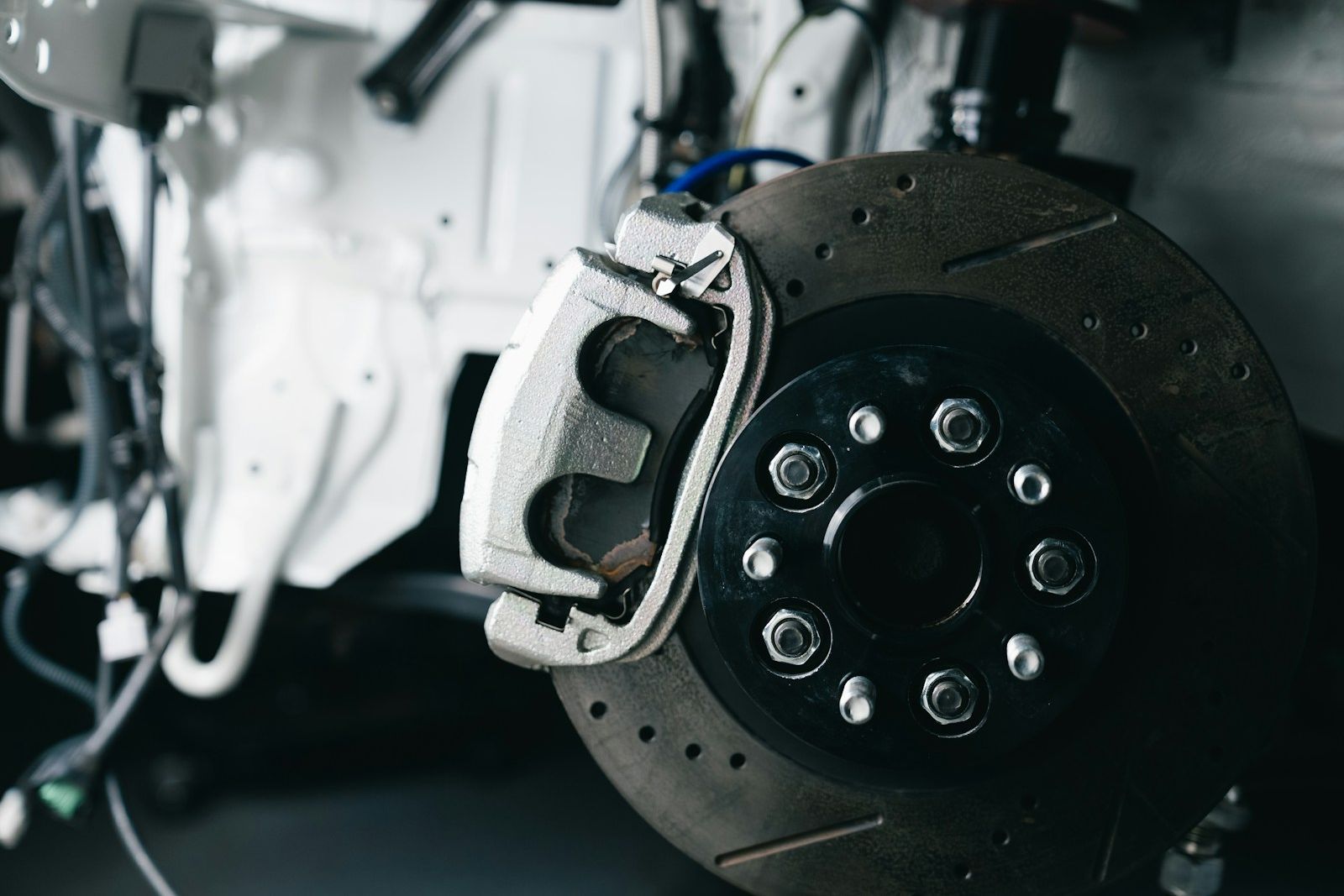
The spread is wide because pad prices, labor rates and vehicle size all move the total. A 2011 Subaru Impreza rear job in Montana and a 2016 Toyota Sequoia rear job in California show how close real invoices can sit: Jerry's customer examples from November 2026 land between about $145 and $225 per axle for parts and labor. The rest of this page breaks down where the money goes, what a fair quote looks like, and which add-ons are worth a yes.
What each source says for pads only, per axle
| Source | Pads only, per axle | Notes |
|---|---|---|
| AAA | $150–$350 | About 1 hour of labor per axle |
| eBay Motors | $150–$300 | Shop price; DIY parts run $35–$175 per axle |
| Jerry (estimate page) | $148–$216 | Typical; economy sedans $150–$250 |
| Both axles, pads only (AAA) | $300–$700 | Front and rear in one visit |
What changes the price
Four things set most of the bill: the vehicle, the pad material, the shop, and what the technician finds once the wheel is off.
Vehicle
Bigger vehicles need bigger pads and often more labor. Jerry says economy sedans land around $150 to $250 per axle for pads, while luxury, electric and performance cars run 25% to 100% higher. A Honda Civic and a BMW 5 Series are not the same job, even though both are just pads.
Front pads usually cost 10% to 20% more than rear pads, because the front axle does most of the stopping and the parts are larger. If a quote for the rear is higher than the front, ask why. Some cars with an electronic parking brake need a scan tool to retract the rear caliper pistons, which adds labor.
Pad material
Ceramic pads tend to be quieter and make less dust. They also add roughly $40 to $120 per axle in parts compared with semi-metallic, per Jerry. Semi-metallic is the cheaper choice. Check your owner's manual or the pads already on the car. If it came with ceramic, stay with ceramic. If it came with semi-metallic, paying extra is a preference, not a need.
Labor rates and region
Jerry puts shop labor at $100 to $200 per hour, and labor makes up about 30% to 50% of a brake service. AAA notes that regional labor rates can vary widely from state to state. A one-hour pad job at $110 an hour is a very different invoice from the same job at $190 an hour in a dense metro area.
What the tech finds
Pads that were left too long can score the rotors, and AAA flags this as a common reason a simple pad job grows. Rusted slide pins, seized bolts or a dragging caliper turn a $200 job into a $400 one. Jerry puts stuck-parts trouble at $50 to $300 extra, and a caliper that drags or leaks at $300 to $600 or more per corner.
Real pad-only invoices, November 2026 (Jerry customer examples)
| Vehicle | Axle | Parts | Labor time | Total |
|---|---|---|---|---|
| 2009 Volkswagen Jetta | Front | $45.94 | 80 min | $224.80 |
| 1992 Toyota Camry | Front | $45.00 | 70 min | $190.99 |
| 2011 Subaru Impreza | Rear | $32.23 | 70 min | $166.44 |
| 2016 Toyota Sequoia | Rear | $56.27 | 70 min | $195.38 |
| 2005 Ford Explorer | Front | $62.59 | 70 min | $196.97 |
Common add-ons and how much they add
| Item | Typical extra cost | Needed? |
|---|---|---|
| Ceramic instead of semi-metallic pads | +$40–$120 per axle | Optional; quieter, less dust |
| Hardware clips and wear sensors | $10–$80 per axle | Often, if clips are rusted or the sensor was triggered |
| Rotors added | +$150–$400 per axle | Only if they fail inspection |
| Stuck or corroded parts | $50–$300 | Depends on what the tech finds |
| Dragging or leaking caliper | $300–$600+ per corner | Yes, if confirmed |
Parts versus labor
On a normal pad-only job, labor and parts are closer to even than most people expect. Jerry says labor runs $80 to $300 per axle and a pad job takes 0.8 to 1.5 hours. AAA says about one hour per axle. Parts, meanwhile, are not expensive: eBay Motors lists brake pads at $30 to $175 depending on the car and the material.
Jerry's November 2026 customer examples show how this plays out. The 2011 Subaru Impreza rear job used $32.23 in parts and 70 minutes of labor, billed at $134.21. The 2009 Jetta front job used $45.94 in parts and 80 minutes of labor, billed at $178.86. In both cases the labor charge was three to four times the cost of the pads.
That is why a cheap pad price on an ad does not tell you much. The work is the same whether the pads cost $35 or $120. What you are really comparing is the shop's hourly rate and whether the quote includes the small items: new hardware clips, brake grease and, on some cars, wear sensors. Jerry puts hardware and wear sensors at $10 to $80 per axle.
Dealer, independent shop or chain
Jerry says dealerships run 15% to 40% higher than independent shops for the same pad work. On a $200 independent quote that is a $30 to $80 difference, and it grows with the vehicle. Dealers use factory pads, which is a point in their favor on some European cars and on vehicles where a specific pad compound matters for noise or ABS behavior.
Independent shops are usually the middle ground between price and quality. Ask what pad brand and line they use and whether the quote is per axle. National chains often advertise a low pad price. Read the fine print: the advertised number is sometimes for the cheapest pad on one axle, with rotors, hardware and labor extra, and with a service charge on top.
AAA members get a discount on labor (AAA describes it as 10% at approved shops) and a 24-month, 24,000-mile warranty on parts and labor at those shops, according to AAA's article. Whatever shop you pick, ask what the warranty covers and for how long. It should be in writing.
Repairs that get bundled with pads
Brake jobs are where service advisors add line items. Some are real, some are padding.
Usually legitimate
- Rotors, when they fail inspection. Pads wear into a groove on the rotor. If the rotor is below the minimum thickness stamped on it, or has deep scoring or cracks, it needs replacing. Jerry adds $150 to $400 per axle for rotors.
- Hardware clips. Rusty or bent clips let pads rattle or stick. A new set is cheap.
- Caliper slide pin service. Jerry puts it at $80 to $150 as a standalone job; as part of a pad job it should be mostly labor and grease.
- A brake fluid flush if the fluid is dark or the car is on a manufacturer schedule. Jerry lists a flush at $90 to $160 on its pad estimate page.
Worth questioning
- Rotors on every pad job. GM's own service bulletin, as reported by Jalopnik, says rotors should not be replaced during normal pad replacement if they meet the minimum thickness spec. A rotor does not need replacing just because pads were.
- Resurfacing as a default. It removes material and can bring a rotor close to its minimum.
- Fluid flush when the manual says nothing and the fluid looks fine. Ask to see the fluid or a moisture test result.
See the guide on brake pads and rotors together for the combined cost, and the one on brake rotor replacement for how to tell resurfacing from replacement.
How long pads last and when to replace them
Jerry puts typical pad life at 25,000 to 70,000 miles. AAA's range is wider, 30,000 to 80,000 miles. City stop-and-go driving, towing, mountain roads and hard braking wear pads faster. Steady highway miles extend them.
Jerry says to replace pads when the friction material is down to about 3 mm. You can often see this through the wheel spokes on cars with open wheels. Do not wait for the squeal or the grind. A squeal is usually the wear indicator doing its job. A grind is metal on metal, and that is how a $200 pad job becomes a $500 pad-and-rotor job, or worse if the caliper gets damaged.
Pads should be replaced in axle pairs, Jerry notes, never one side alone. Uneven pads on one axle can make the car pull when you brake. If only one side looks worn, a stuck caliper or slide pin is a likely cause and worth checking before you pay for new pads that will wear out the same way.
After new pads go on, Jerry says to pump the pedal until it firms up before driving, and to bed the pads in with 8 to 10 medium stops from 35 to 45 mph with cool-down driving between stops. A good shop will tell you the same.
How to read the quote and spot padding
Ask for the quote in writing, split into parts and labor, by axle. A decent one lists the pad brand and type, labor hours, a hardware or shop-supplies line, and tax. If it just says brake service, ask what that includes.
Math you can do on the spot: take the labor hours, multiply by the shop rate, and compare to the labor line. A pad job should be roughly an hour per axle (AAA) and under two hours even when the shop is slow (Jerry). If the quote says three hours for pads alone, ask why.
Watch for these:
- A front pad quote with rotors included that you did not ask for. Ask to see the rotor measurement against the minimum thickness stamped on it.
- A shop supplies or environmental fee over a few dollars on a pad job.
- Premium pads on a commuter car you drive 8,000 miles a year.
- Fluid flush or caliper replacement added without a symptom to point to, like a spongy pedal or a dragging wheel.
One line you should expect on any honest quote is a note about the condition of the rotors. If a shop says they are fine, that is good news, not a missed upsell.
Doing it yourself
eBay Motors puts DIY parts at $35 to $175 per axle. Jerry says DIY saves $80 to $300 in labor per axle, and that a first-timer should plan one to three hours per axle against 45 to 90 minutes for a professional. You need a jack and stands, a socket set, a torque wrench, brake cleaner, caliper grease and a way to compress the caliper piston.
It is a reasonable first project on a simple car with manual rear brakes. It is a bad one if your car has an electronic parking brake on the rear, because retracting that caliper often needs a scan tool or a special sequence. If the rear pads are a Jerry-style $150 job, the money saved may not be worth the learning curve.
Brakes are not a place to guess. Torque the caliper bolts to spec, check that the pedal is firm before moving the car, and do a slow test in a parking lot. If anything feels off, have a shop look at it.
Sample invoice
Sample invoice: front pads on a 2016 Toyota Camry at an independent shop
- Front brake pads, ceramic
- $85
- Hardware clips and grease
- $15
- Labor, 1.2 hours at $115
- $138
- Total
- $238
An illustration built from the ranges above, not a quote. Rotors, fluid and tax are not included.
How to pay less
- Ask for the quote per axle and in writing, with labor hours and pad brand listed.
- Choose semi-metallic if your car shipped with it; ceramic adds roughly $40–$120 per axle.
- Do not accept rotor replacement without seeing the measurement against the minimum thickness stamped on the rotor.
- Replace pads at about 3 mm of material, before they score the rotors.
- Compare an independent shop to the dealer; Jerry puts dealers 15%–40% higher.
- Only service the rear when it is actually due; check pad thickness on each axle instead of replacing all four wheels on a schedule.
Questions owners ask
How much does it cost to replace brake pads on all four wheels?
AAA puts pads only at $300 to $700 for both axles. Jerry's four-wheel estimate for pads only is $296 to $429. The lower figure assumes economy cars and independent shops.
Can I replace just the front brake pads?
Yes. Pads are replaced by axle, not by car. The front pads wear faster because the front brakes do most of the stopping, so many drivers replace the front set two or three times before the rear.
How long do brake pads last?
Jerry says 25,000 to 70,000 miles. AAA says 30,000 to 80,000. Driving style and where you live make a big difference, so the best check is a visual inspection once a year.
Do I have to replace rotors when I replace pads?
Not automatically. GM's service bulletin, as reported by Jalopnik, says to replace rotors only if they do not meet the minimum thickness specification. If a rotor is deeply scored, cracked or below minimum, it needs replacing.
Is it safe to drive with squealing brakes?
A light squeal is often the wear indicator and means pads are getting low. A grinding sound means the pads may be worn through, and driving on them can damage the rotors and calipers. Have it checked soon, and have a professional look at any brake issue you are not sure about.
Why is the dealer so much more expensive for brake pads?
Dealer labor rates and factory pad prices are higher. Jerry puts dealerships 15% to 40% above independent shops. That can be worth it on a car under warranty or one that needs a specific pad, but for most commuter cars an independent shop is fine.
Sources
- How much to replace brake pads, AAA, checked November 23, 2026pads-only range per axle, pad life, labor time, warning signs
- How Much Does Brake Pad Replacement Cost?, Jerry, checked November 23, 2026per-axle ranges, labor, add-ons, dealer markup, customer examples, lifespan
- Brake Pad and Rotor Replacement Costs: What to Expect, eBay Motors, checked November 23, 2026shop price for pads only, DIY parts range
- When To Resurface Brake Rotors, And When You Should Just Replace Them, Jalopnik, checked November 23, 2026GM and BMW service bulletin guidance on not replacing rotors with pads