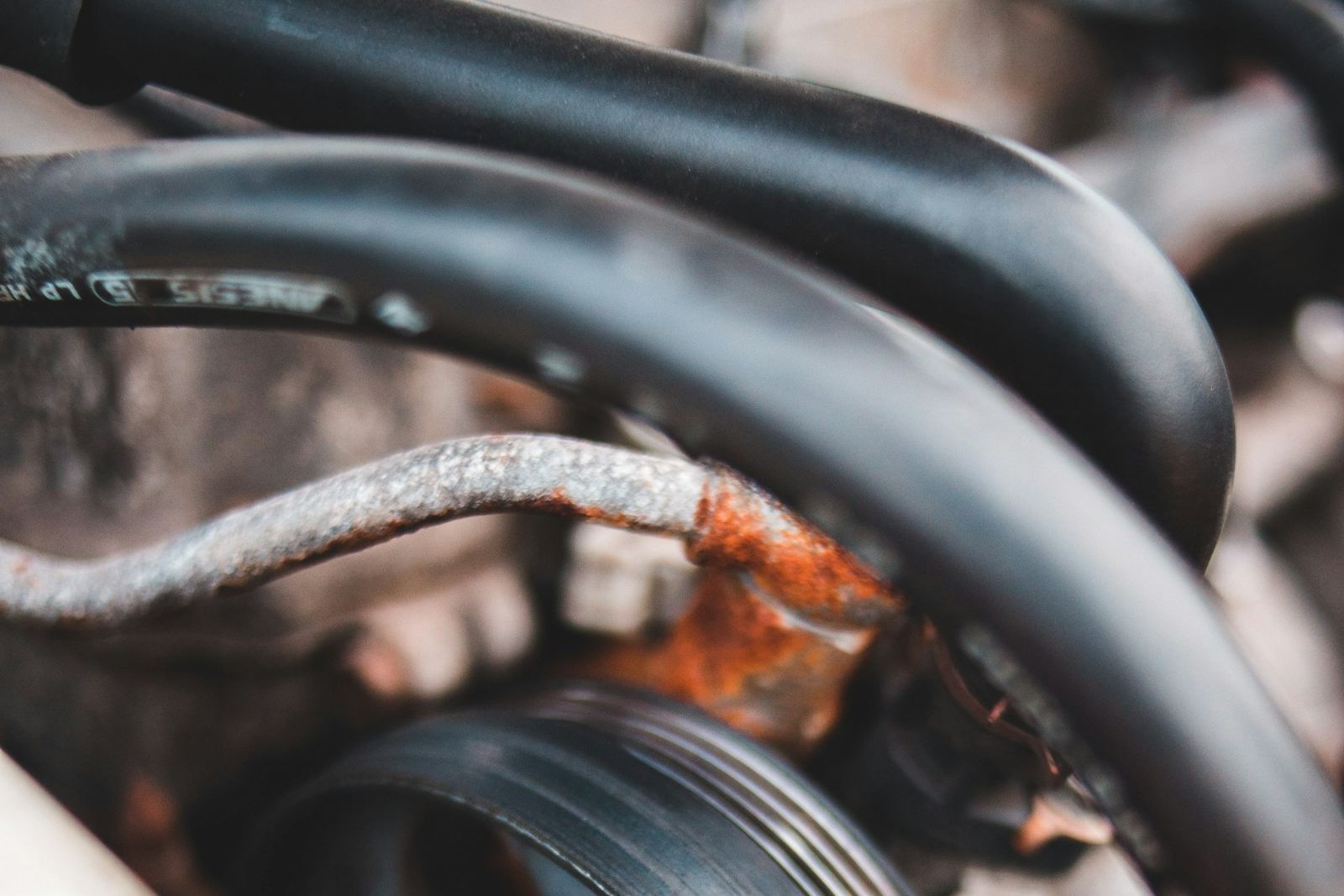
Where the bill goes sideways is the add-ons. A shop that finds a weak tensioner or a noisy idler pulley can easily double the invoice, and sometimes that is a real need and sometimes it is padding. This guide shows what each line should cost and how to tell the difference.
Belt-only replacement by vehicle
| Vehicle | Typical total |
|---|---|
| Honda Civic | $100–$125 |
| Honda Accord | $100–$130 |
| Nissan Altima | $100–$125 |
| Toyota Camry | $125–$160 |
| Toyota Corolla | $120–$180 |
| Ford Fusion | $75–$150 |
| Ford F-Series truck | $120–$160 |
| Chevy Silverado | $110–$160 |
| Toyota Land Cruiser | $150–$210 |
| Subaru Legacy | $160–$220 |
What changes the price
The belt is not what moves the total. Access is.
On a 2016 Honda Civic you can see the whole belt path when you pop the hood, and the job is a short one. On a V6 crossover with a cramped engine bay or a plastic splash shield that has to come off first, the same belt can take twice the time. HomeGrail's shop-level figures run from about $100–$125 for a Civic to $160–$220 for a Subaru Legacy, and nearly all of that gap is labor.
HomeGrail puts labor at one to two hours and about $80–$90 for a straightforward job. Fixd lists $54–$68. That spread is real and mostly comes down to where the shop is. HomeGrail's regional numbers show the Midwest at $90–$150, the West Coast at $100–$170 and the East Coast at $110–$220.
Three other things move the number:
- Belt quality. An aftermarket belt is fine for most daily drivers. An OEM belt costs more and rarely changes how long the job lasts.
- Routing difficulty. Some engines need a special tool for the tensioner or have the belt behind a motor mount or bracket.
- What else is wrong. A belt that has glazed over often means a worn pulley or a leaking seal nearby, and that is where the real money is.
Parts versus labor
This is a labor job with a cheap part attached. HomeGrail lists the belt at $50–$65, and Fixd shows $58. The rest of the invoice is shop time.
On a $150 invoice, expect roughly $60 for the belt and $90 for labor. If the part line says $120 for a standard belt on a Camry or Accord, ask which brand it is. Premium and OEM belts exist, but a plain belt that costs more than twice the usual price deserves a question.
Shops mark up parts, and that is normal. What you should watch is whether the labor hours are the book time for your engine. Ask for the hours and the hourly rate. A one-hour job billed at 2.5 hours is a conversation worth having.
Dealer, independent shop or chain
For a belt-only job, an independent shop or a chain is almost always the cheaper route. HomeGrail's roundup lists NAPA at $80–$180, Midas at $90–$170 and YourMechanic at $100–$160. Those overlap heavily, so the shop's name matters less than the written quote.
HomeGrail does not list dealer prices, so I have no number for them. Dealers generally charge a higher hourly rate, and the extra buys you factory parts and brand-specific tooling, neither of which a plain belt swap needs.
There is one case where a dealer is reasonable. If your car is under a factory warranty and the belt failed early, check whether it is covered before you pay anyone.
Related repairs: the real ones and the padding
A belt is driven around a tensioner and a set of pulleys. When the shop pulls the belt off, it can see and spin each one by hand. That is a fair time to find a problem.
Real reasons to add a part:
- A tensioner that is bouncing, rusted or has a pulley with play. Fixd lists the idler pulley, tensioner pulley and water pump as the parts commonly replaced with the belt. HomeGrail's standalone tensioner price is about $210–$240.
- A pulley that wobbles or grinds when you spin it. An idler roller runs about $130–$160.
- A belt that drives the water pump while that pump is already leaking or noisy.
Questionable add-ons:
- A tensioner on a car with a belt that is fully tight and a pulley that spins smoothly, just because the odometer is high.
- A water pump on an engine where the belt does not even touch it (timing-belt-driven pumps are a different job).
- A 'drive system inspection' fee on top of a belt swap. Looking at the pulleys is part of doing the job.
If a shop recommends a tensioner, ask them to show you the play or the noise. A good shop will.
Signs you need one and how long a belt lasts
Fixd says belts are generally replaced every three to four years or between 50,000 and 100,000 miles, depending on the vehicle. HomeGrail gives 60,000–100,000 miles, or about four to seven years at 15,000 miles a year. Your owner's manual is the better answer for your car.
Fixd also advises replacing the belt within about 1,000 miles of when it is due. The squeal is the usual early warning. Cracks across the ribs, missing chunks and a shiny glazed surface are the visual ones.
The risk of waiting is not just the belt. Fixd points out that a broken belt does not set off the check engine light. On a car where the belt drives the water pump, a failure can mean overheating and serious engine damage, and a broken belt stops mechanical power steering assist, which can contribute to an accident. If the belt is shredded and you are on the highway, pull over safely and have the car towed rather than driving it to the shop.
How to read the quote
A clean quote for a belt-only job has three lines: the belt, labor with hours, and shop fees or tax. Anything beyond that should be there because of something the shop found.
Look for these:
- Labor hours that match the work. One to two hours is the range HomeGrail gives. Three hours for a belt on a four-cylinder is high.
- A tensioner line with a reason. The shop should be able to say what is wrong with it.
- Duplicate inspection charges. A separate 'diagnostic' line for a squealing belt is hard to justify when the belt is the diagnosis.
- Part names. 'Belt' should say which belt. Some engines have more than one drive belt.
HomeGrail lists a standalone engine diagnostic at $100–$130. That is reasonable if the shop is chasing a noise that is not obviously the belt. It is not reasonable as an automatic add-on when you came in for a belt.
Common mistakes that cost extra
Most overspending on this job comes from a handful of habits, and none of them need special knowledge to avoid.
Waiting for the squeal to turn into a failure. Fixd says a failed belt will not trigger the check engine light, so the noise and the cracks are all the warning you get. Fixd also advises replacing the belt within about 1,000 miles of when it is due. A belt that snaps on the road means a tow, and on cars where it drives the water pump it can mean overheating on top of that.
Buying the belt by model name only. Engines within the same model line can use different belts. Fixd lists a serpentine belt and a V-belt as the parts for its DIY example, which is a reminder that some engines use more than one drive belt. Give the shop or parts counter your VIN or exact engine size.
Paying for a tensioner you do not need. At about $210–$240 for the part and labor (HomeGrail), a tensioner is more than three times the cost of the belt itself. Replace it when it is worn, noisy or showing play. Do not replace it only because it is there.
Skipping the written quote. HomeGrail's shop-level ranges overlap, which means two phone calls will tell you more than any website. Ask for the total with the belt, the hours and the rate.
One more point on timing. If your car is also close to a timing belt service, ask the shop whether the two jobs share any labor. Our timing belt guide covers that bigger job, and the serpentine belt is a separate, much cheaper item.
How it fits your maintenance schedule
The serpentine belt is a wear item, like tires and wipers. It does not last the life of the car, and it does not need attention every oil change.
HomeGrail gives a lifespan of 60,000 to 100,000 miles, or roughly four to seven years at 15,000 miles a year. Fixd says three to four years or 50,000 to 100,000 miles. The two overlap enough to tell you the sensible habit: look at the belt at every oil change, and replace it on the manufacturer's schedule or when you see cracks, glazing or fraying.
A visual check costs nothing. With the engine off, look at the ribbed side of the belt for cracks across the ribs and for chunks missing. Press on the belt between pulleys and look for a loose or flopping belt. A shop that spots a problem should be able to point to it.
If you drive a high-mileage car and do not know the service history, replacing the belt is a cheap form of insurance compared with a failed one. At $80–$180 it costs a small fraction of the repairs a belt failure can set off, such as an alternator, a water pump or power steering problems.
Doing it yourself
Fixd rates this as an intermediate DIY job and puts the DIY cost at about $58, roughly half the mechanic price. HomeGrail's belt price of $50–$65 agrees.
What you need: the right belt for your engine (get it by VIN or exact engine size, not just the model), a wrench or breaker bar for the tensioner, and a photo or diagram of the routing. Take a picture before you remove the old belt. A wrong routing is an easy mistake and it will not run right.
Have a pro handle it if you are not comfortable releasing a spring-loaded tensioner, or if the belt sits behind a subframe or motor mount. This is not a safety-critical system in the way brakes are, but a mis-routed belt can leave you without power steering or charging.
Sample invoice
Sample invoice: belt on a 2017 Toyota Camry
- Serpentine belt (aftermarket)
- $55
- Labor, 1.0 hour at $95
- $95
- Shop supplies and tax
- $10
- Total
- $160
An illustration built from the HomeGrail part and labor ranges, not a quote. The hourly rate and shop fee are assumptions.
How to pay less
- Ask for the belt, labor hours and hourly rate on separate lines before you approve anything.
- Say 'belt only unless you can show me a bad tensioner or pulley' when you drop off the car.
- Compare two independent shops. HomeGrail's shop-level ranges overlap, so the cheaper written quote usually wins.
- Replace the belt when it is due, not after it fails. Waiting puts the water pump, power steering and alternator at risk.
- If you can reach the belt and have a routing photo, the part is only about $50–$65 and the job is a reasonable DIY.
Questions owners ask
How much does it cost to replace a serpentine belt?
HomeGrail lists shop totals of $80–$180 for most vehicles, with $120–$150 the usual range. Fixd puts a mechanic job at $112–$126. The belt is $50–$65 of that.
How long does a serpentine belt last?
Fixd says three to four years or 50,000 to 100,000 miles. HomeGrail says 60,000 to 100,000 miles. Check your owner's manual, because it varies by engine.
Should I replace the tensioner with the belt?
Only if it shows wear. Fixd lists the tensioner, idler pulley and water pump as commonly replaced with the belt, and HomeGrail prices a tensioner at about $210–$240. Ask the shop to show you what is wrong.
Will a bad serpentine belt turn on the check engine light?
Fixd says no. A failed belt does not trigger that light, so squealing and cracks are your warning.
Can I drive with a broken serpentine belt?
Not for long. Fixd notes a broken belt stops mechanical power steering and, on cars where it drives the water pump, can lead to overheating. Have the car towed.
Is it cheaper to do it myself?
Yes, by about half according to Fixd, since most of the job cost is labor. You pay roughly $50–$65 for the belt.
Sources
- Serpentine Belt Replacement Costs in 2025 – Parts and Labor Reviewed, HomeGrail, checked November 23, 2026shop total ranges, belt price, labor, tensioner and related repair prices, per-vehicle ranges, belt lifespan
- Cost to Replace Serpentine Belt, Fixd, checked November 23, 2026mechanic vs DIY total, replacement interval, risks of a failed belt, commonly bundled parts