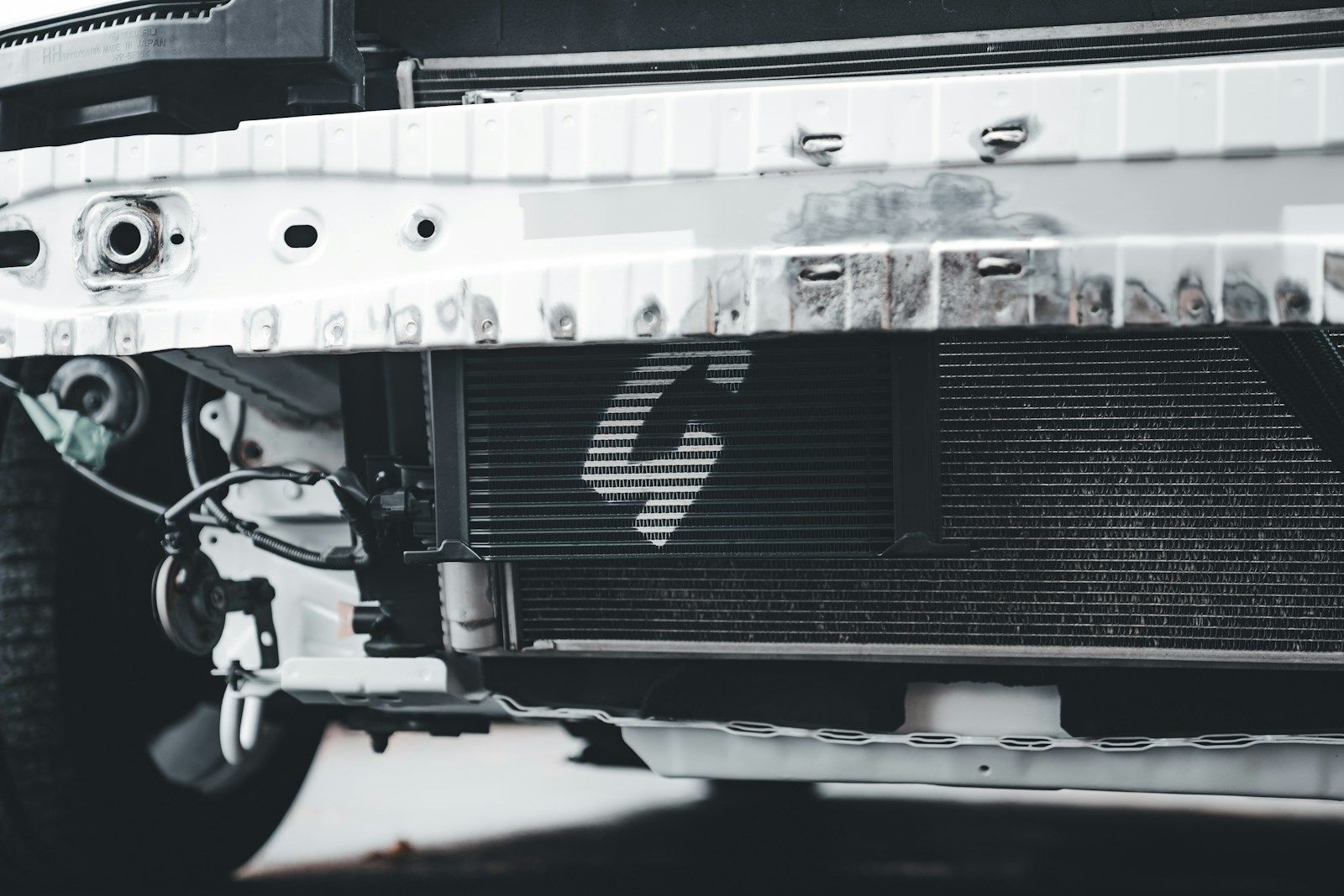
What you pay matters less than how often you do it. Intervals vary enormously by manufacturer: the schedule printed on a quick-lube sticker can be several times shorter than what your owner's manual calls for. A flush that is done too early is a waste of $150. One that is never done can leave you with a much bigger repair.
Coolant flush cost by provider
| Provider | Price | Notes |
|---|---|---|
| Chain or quick-lube shop | $90–$160 | Take 5 published range; labor included |
| Dealer | $155–$225 | Honda dealer specials: $155.99 coolant change, $199.99–$222.88 coolant exchange |
| Jerry, overall range | $100–$250 | Varies by make, model and location |
| DIY | $20–$35 | About two gallons of prediluted 50/50 coolant; Prestone gallons were $9.98–$17.97 at Walmart |
What changes the price
The provider
The provider is the biggest variable. CarWhere's chain range of $90–$160 comes from Take 5's published prices. Its dealer examples ran $155–$225: Honda dealers advertised a coolant change at $155.99 and a coolant exchange at $199.99–$222.88. Jerry's $100–$250 spans both.
Your vehicle
Jerry says make and model affect the price, and it does not give a vehicle-by-vehicle split. A quote for your exact vehicle beats a national average.
What the service includes
A basic coolant change drains and refills. A flush or exchange pushes new coolant through the system. Jerry says the job takes about 20 minutes and that a shop can often add it to an oil change. Ask which one is being sold, and what type and amount of coolant is going in. CarWhere says chain shops typically refill with coolant that meets the manufacturer's spec, and dealers use factory coolant and a bleed procedure. Ask for the spec on the invoice.
Examples of coolant change intervals
| Source | Interval |
|---|---|
| Jerry, general guideline | Every 2 years or 30,000 miles (check the manual first) |
| Toyota Super Long Life Coolant | First change at 100,000 miles, then every 50,000 |
| GM Dex-Cool, 2027 Silverado | Every 150,000 miles or 6 years |
Cooling-system repairs a flush will not fix
| Repair | Typical cost |
|---|---|
| Radiator cap | $20–$50, plus $80–$150 for diagnosis |
| Hoses and clamps | $198–$230 |
| Thermostat or housing | $250–$500 |
| Expansion (overflow) tank | $129–$350 |
| Water pump | $450–$900 ($800–$1,400 on timing-belt engines) |
| Radiator | $236–$1,200 |
| Heater core | $626–$1,500+ |
How often you need it, and the quick-lube trap
Jerry gives a general guideline of every 2 years or 30,000 miles, and says to check the owner's manual first. The manual wins. CarWhere found that Toyota's Super Long Life Coolant is first replaced at 100,000 miles and then every 50,000, and that GM's Dex-Cool on a 2027 Silverado is every 150,000 miles or 6 years. Against those schedules, a service at 30,000 miles is early.
CarWhere advises following the owner's manual rather than a quick-lube sticker. That is the whole trap. A shop that applies one interval to every car can sell you a service you will not need for years.
There are cases where an earlier change is sensible. A car you bought used with no service history is one. Another is an engine that overheated and was repaired. If you cannot confirm when the coolant was last changed, a flush is cheap insurance next to the repairs Jerry lists, such as $450–$900 for a water pump or $236–$1,200 for a radiator. CRC also calls overheating one of the most common causes of head gasket failure, a $1,000–$3,000 repair.
Chain, dealer or do it yourself
A chain shop is the cheapest professional option. CarWhere's range of $90–$160 includes labor, and the coolant is usually the manufacturer's spec. The risk is a shop that uses a universal coolant when your car calls for a specific type. Ask what goes in.
A dealer charges more, $155–$225 per CarWhere, but uses factory coolant and the manufacturer's bleed procedure. If your car is under warranty or you want the paperwork, the extra $65 to $70 may be worth it. If you keep records, the independent shop's invoice with the coolant spec is usually enough.
Doing it yourself runs about $20–$35 in coolant, per CarWhere. The catch, as Jerry points out, is safety and disposal: spilled coolant is dangerous to pets and children, and old coolant cannot go down a drain. Jerry strongly recommends a professional. If you do it yourself, take the old coolant to a recycling center or parts store that accepts it.
Add-ons and upsells: which are real
A coolant flush is a simple job, so extra charges deserve questions. A radiator cap at $20 to $50 (Jerry) is reasonable if the cap is old or the system will not hold pressure. A pressure test is fair if there is a leak. A chemical flush additive or a second machine pass is not needed on a system that is in good shape and has been changed on schedule.
CarWhere's Honda dealer examples show a useful distinction. The coolant change at $155.99 and the coolant exchange at $199.99–$222.88 are different services, and the second costs about $44 to $67 more. Ask which one is on your quote and what the manufacturer calls for.
If the shop recommends replacing hoses, the thermostat or the water pump, ask what they found. Jerry's numbers are $198–$230 for hoses and clamps, $250–$500 for a thermostat or housing, and $450–$900 for a water pump. A flush on a healthy cooling system does not need any of that. A leak, a collapsed hose or a car that is running hot does.
What happens if you skip it
Nobody gets a warning light for old coolant, which is why a flush feels optional until it is not. The bills for cooling-system trouble are far larger than the service. Jerry's coolant leak guide lists a thermostat or housing at $250–$500, a water pump at $450–$900 ($800–$1,400 on timing-belt engines), a radiator at $236–$1,200 and a heater core at $626–$1,500 or more. CRC names overheating as one of the most common causes of head gasket failure, and puts that repair at $1,000–$3,000.
To be fair, a coolant flush is not a magic shield. It does not repair a failing part. What it does is replace coolant that has aged according to the manufacturer's schedule. Following that schedule is cheap insurance because it costs $90–$225 once every few years, against repairs that start at $250.
The fair reading is this: stay on your manual's interval, and do not let a shop talk you into doubling it. If the manual says 100,000 miles, the shop's 30,000-mile sticker is not what the manufacturer asks for.
What the interval means in dollars
The interval changes your total spend more than the price per service does. Take CarWhere's chain range of $90–$160 per exchange and run it over 150,000 miles.
On a 30,000-mile schedule, which Jerry gives as a general guideline, that is five services at 30,000, 60,000, 90,000, 120,000 and 150,000 miles, or $450 to $800.
On Toyota's Super Long Life Coolant schedule, the first change is at 100,000 miles and then every 50,000, so you reach 150,000 miles with two services, or $180 to $320.
On GM's Dex-Cool schedule for a 2027 Silverado, every 150,000 miles or 6 years, you would do one service by 150,000 miles, or $90 to $160, and a low-mileage truck would be on the calendar limit instead.
Those are calculations from the sources' prices and intervals, not quotes, and they ignore inflation and tax. The point is the gap: a conservative sticker schedule costs two to three times as much over the life of the car as the manufacturer's own schedule. Pay for what the manual asks for.
Doing it yourself: what the $20–$35 covers
CarWhere prices the DIY route at about $20 to $35, based on roughly two gallons of prediluted 50/50 coolant. It found Prestone gallons at Walmart for $9.98 to $17.97. That is the whole parts cost for most cars, and it is a fraction of the $90–$225 a shop charges.
Two things stop most people. Jerry says a professional is strongly recommended because spilled coolant is dangerous to pets and children. And old coolant is toxic waste: you cannot pour it down a drain or into the household trash, so you need a container, a place that will take it, and the time to get there.
The other cost is the right coolant. CarWhere's examples show that manufacturers use different formulas on different schedules, from Toyota's Super Long Life Coolant to GM's Dex-Cool. Using the wrong one is a mistake you cannot see until it matters. Read the owner's manual, buy the specified type, and keep the receipt.
If you do it yourself, keep a note of the date and mileage. A service record is worth more than the $55 or more you saved.
How to read the quote
A clear quote names the service (drain and fill or exchange), the coolant type and spec, how many gallons, and the labor charge. If it is a flat price, ask whether coolant is included and whether disposal is a separate fee.
Compare the price to the ranges above. CarWhere's $90–$160 at chains and $155–$225 at dealers are the two numbers to hold in your head. If a shop quotes $300 for a basic service, ask what is included. You may be looking at a bundle with extra fluids.
Finally, ask what the shop will do if your car needs a specific coolant they do not stock. A good shop will order it or tell you to bring it. A bad one will use whatever is on the shelf, and you will not know until something corrodes.
One last check is the record. Ask for an invoice that shows the date, the mileage and the coolant spec, and keep it with your service records. When the next service comes due, you will know whether the interval is counted from that date or from the odometer, which matters on schedules like GM's 150,000 miles or 6 years, where whichever limit comes first applies. A shop that cannot tell you what went into your car has not given you much for $90 to $225.
Sample invoice
Sample invoice: coolant exchange plus a radiator cap at a chain shop
- Coolant exchange (coolant and labor)
- $125
- Radiator cap
- $35
- Total
- $160
An illustration using the middle of CarWhere's $90–$160 chain range and the middle of Jerry's $20–$50 radiator cap range. It is not a quote, and a cap is only needed if the old one is worn.
How to pay less
- Follow the owner's manual interval, not a sticker. CarWhere found intervals as long as 100,000 miles for the first Toyota change and 150,000 miles or 6 years on a GM truck.
- Check what a chain shop charges before a dealer. CarWhere's $90–$160 against $155–$225 saves $65 or more.
- Ask which service you are buying: a coolant change ($155.99 at a Honda dealer special) and an exchange ($199.99–$222.88) are priced differently.
- Ask for the coolant spec on the invoice so the right type goes in.
- Do not accept a flush as a fix for overheating without a diagnosis; Jerry's cooling repairs run $20–$1,500+.
- If you are handy, DIY costs about $20–$35 in coolant, but plan the disposal first.
Questions owners ask
How much does a coolant flush cost?
CarWhere found $90–$160 at chains and $155–$225 at dealers in November 2026. Jerry's range is about $100–$250. DIY coolant costs about $20–$35.
How often should I flush my coolant?
Check your owner's manual. Jerry's general guideline is every 2 years or 30,000 miles, but CarWhere found Toyota's long-life coolant first changes at 100,000 miles and GM's Dex-Cool on a 2027 Silverado lasts 150,000 miles or 6 years.
Is a coolant flush the same as a drain and fill?
Not always. CarWhere's Honda dealer examples price a coolant change at $155.99 and a coolant exchange at $199.99–$222.88. Ask exactly what the shop is selling, and how much new coolant goes in.
Can I do a coolant flush myself?
You can. CarWhere puts the coolant at about $20–$35. Jerry strongly recommends a professional, because spilled coolant is dangerous to pets and children and old coolant must be disposed of properly.
How long does a coolant flush take?
Jerry says about 20 minutes, and that it can often be added to a standard oil change.
Will a coolant flush fix overheating?
Only if old coolant is the cause. Jerry lists thermostat, hose, radiator, water pump and cap repairs separately, and CRC calls overheating a common cause of head gasket failure, so get overheating diagnosed rather than flushed.
Sources
- How Much Does a Coolant Flush Cost? (2026), CarWhere, checked November 23, 2026chain and dealer prices, DIY cost, coolant prices, Toyota and GM intervals
- How Much Does a Cooling System Flush Cost?, Jerry, checked November 23, 2026range, general interval, duration, DIY safety
- Why Is There Coolant Leaking from My Car?, Jerry, checked November 23, 2026cooling system repair costs
- Blown Head Gasket Repair Cost, CRC Industries, checked November 23, 2026overheating as a cause of head gasket failure, repair range