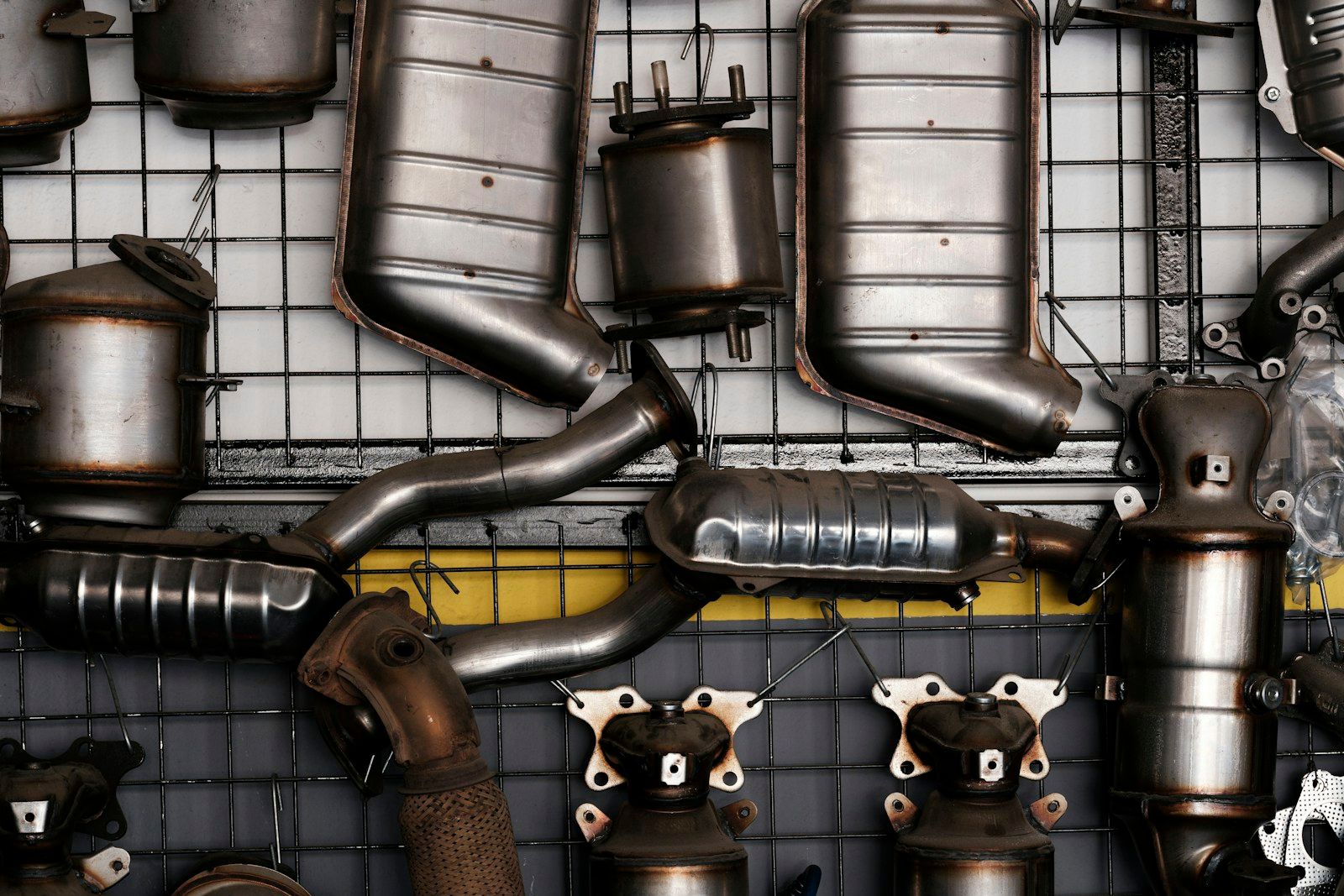
What catches people out is the count. Most four-cylinder cars have two sensors, and V6 and V8 cars usually have four. A quote to 'replace the O2 sensors' can be four times what you expected, so find out how many are being replaced and why.
Real invoices from Jerry's page
| Vehicle | Part | Labor time | Total |
|---|---|---|---|
| 2013 Ford Escape | $61.74 | 45 min | $136.09 |
| 2007 Chevrolet Trailblazer | $78.38 | 50 min | $171.93 |
| 2009 Jeep Compass | $79.49 | 50 min | $175.83 |
| 2007 Chevrolet Express 2500 | $90.35 | 50 min | $176.74 |
| 2010 Mitsubishi Outlander | $112.37 | 35 min | $177.02 |
| 2010 Volkswagen Jetta | $162.06 | 35 min | $232.28 |
| 2012 Toyota RAV4 | $258.74 | 40 min | $324.82 |
What changes the price
The part and the sensor's location do most of the work.
Jerry's seven real invoices show parts from $61.74 on a 2013 Ford Escape to $258.74 on a 2012 Toyota RAV4. Labor on those jobs was only 35–50 minutes, so the part is usually the bigger line. Totals ranged from $136.09 to $324.82.
Position matters. Jerry says upstream sensors cost $100–$250 more than downstream ones. Sensors tucked behind heat shields or subframes add $100–$200. Rusted threads can add 0.3 to 1.0 hour, which Jerry prices at $40–$150.
Then there is brand. OEM costs $50–$150 more than aftermarket on Jerry's page. For a sensor that simply reports to the computer, a quality aftermarket part is usually fine, and a bargain unknown brand is not worth the saving, since you pay for the labor twice if it fails.
Last, region. Jerry puts the gap between shop rates across regions at $40–$120.
What pushes the price up
| Factor | Extra cost or time |
|---|---|
| Upstream versus downstream sensor | $100–$250 more |
| OEM versus aftermarket | $50–$150 more |
| Hidden sensor behind a heat shield or subframe | $100–$200 more |
| Rusted or seized threads | 0.3–1.0 hour extra, $40–$150 |
| Regional shop rates | $40–$120 difference |
A second data point
| Source | Figure |
|---|---|
| Jerry typical total | $159–$247 (average $154–$270) |
| Jerry premium or hard-to-reach | $600–$800 |
| AAA, sensor added during a converter job | About $300 per sensor |
Parts versus labor
On a straightforward job, expect the part to be the bigger piece. Take the 2010 Mitsubishi Outlander on Jerry's page: a $112.37 part and $64.65 of labor for 35 minutes, $177.02 total. The 2007 Trailblazer was $78.38 for the part and $93.56 for 50 minutes of labor, $171.93 total. Labor can run past the part on a cheap sensor.
Jerry's labor guidance is 0.5 to 0.8 hour for an easy sensor, 1.5 to 2 hours or more for a hidden one, and 1.5 to 2.5 hours if it is rusted or awkward. A pro shop typically takes half an hour to two hours.
AAA's catalytic converter guide has a different number, about $300 per sensor. That is the figure a shop adds when it replaces a sensor in the course of a converter job, and it explains why people see much higher prices than $177. If your quote is much above $247 on a standard car, ask whether it is for a premium vehicle, a hard-to-reach upstream sensor or a bundle.
How many sensors and which one
Most four-cylinder cars have two oxygen sensors, and V6 and V8 cars usually have four, according to Jerry. The sensor before the catalytic converter is called upstream, and the one after is downstream.
The code usually tells you which one. Jerry lists P0131 and P0133 among the diagnostic codes tied to these sensors, along with P0420 and P0430, which point at converter efficiency. Those last two do not automatically mean a bad sensor or a bad converter, so a shop should look at live sensor data before replacing parts.
Jerry also says a narrowband upstream sensor should switch about one to two times per second. A shop with a scan tool can check that in a few minutes. Replacing all four sensors because one failed is rarely necessary unless the others are failing the same tests. Ask for the code, the sensor position and the reading that shows the failure.
Dealer, independent shop or chain
For an oxygen sensor, an independent shop or a chain is usually the sensible choice. The part is a common item, and the job takes under an hour on most cars. Jerry's examples were done at ordinary shops across several states, and the totals sat between about $136 and $325.
A dealer will use an OEM sensor, which Jerry says costs $50–$150 more than aftermarket. That is worth paying on a car where aftermarket sensors have a record of triggering codes, or when the car is under warranty.
Warranty is worth a check. Jerry says oxygen sensors may be covered for 2 years or 24,000 miles, and that converters and the engine computer may be covered for 8 years or 80,000 miles. If your car is newer than that, ask before you pay. Not every vehicle follows the same terms, so your warranty booklet is the authority.
How to read the quote
A clear quote for a sensor job names the sensor position (bank 1 upstream, for example), the part brand, labor hours and fees.
Compare with Jerry's typical $159–$247 per sensor. A quote above that is not wrong by itself, and you can check the common reasons: an upstream sensor, a hidden one, an OEM part, a premium car.
Questions worth asking:
- Which sensor is it, and how do you know it is bad?
- Is the part OEM or aftermarket, and what is the warranty?
- Is there anything leaking oil or coolant near the sensor? Contaminated sensors can fail again.
- Are you charging a diagnostic fee on top of the code read?
The leak question is the one most owners miss. A sensor that was fouled by oil or coolant will fail again if the leak is not fixed, and replacing it without finding the cause is a waste of money.
How long sensors last and what to skip
Jerry says sensors can get 'lazy' at around 80,000 to 120,000 miles or more, meaning they respond slowly and skew fuel mixture before they fail outright. That is a reason to replace one that shows up in a diagnostic, not a reason to replace healthy sensors at a set mileage.
Skip these:
- Replacing every sensor 'to be safe' when only one has a code.
- A fuel system cleaning sold along with a sensor job.
- A new converter based only on a P0420 or P0430 code without checking the sensors and for leaks first.
Jerry also notes that a failed sensor can lead to poor fuel economy and a failed emissions test, so it is worth fixing promptly. It is not an emergency in the way brake work is, though, and you generally have time to get a second quote.
Upstream versus downstream, in plain terms
Shop quotes refer to 'bank 1 sensor 1' or 'upstream' and 'downstream,' and the difference affects both cost and urgency.
The upstream sensor sits before the catalytic converter and feeds the engine computer the data it uses to adjust the fuel mixture. The downstream sensor sits after the converter and is mostly there to monitor how well the converter is working. Jerry's pricing reflects this: upstream sensors cost $100–$250 more than downstream ones.
For your wallet, a failed upstream sensor is the one more likely to hurt fuel economy and driveability, and the one more likely to cost more. A failed downstream sensor often shows up as an emissions problem or a catalytic converter code, and sometimes the car drives normally.
That is why the position matters when you get a quote. If one shop says 'replace the sensors' and another says 'replace the bank 1 upstream sensor,' the second one has actually diagnosed something. Ask which one, and what the data showed.
And if you see a price near $600–$800 for what sounds like a simple sensor, Jerry says that range applies to premium models or hard-to-reach sensors. Ask the shop which of those it is.
When you need it for an emissions test
Many drivers end up replacing a sensor because of an emissions or inspection failure, and it helps to know what to expect.
Jerry lists a failed emissions test among the symptoms of a bad sensor, along with the check engine light, rough idle, poor fuel economy and, sometimes, a sulfur smell or sooty tailpipe. It also lists P0420 and P0430 among the related codes.
Before you pay for a sensor to pass a test, make sure the fix matches the cause. If the code points at converter efficiency, the answer may be a sensor, a leak or the converter itself. Our catalytic converter guide covers that decision, and the price gap is large: $159–$247 for a typical sensor against $220–$1,270 or more for a converter.
Timing matters too. After a repair, the car's computer often needs a drive cycle before it will show as ready for an inspection. Ask the shop how many miles or days you need to drive before the test, so you do not go back and fail on readiness rather than on the repair. The exact rules vary by state, so your state's inspection program is the authority on that.
Doing it yourself
This is one of the more reachable DIY repairs. Jerry says a DIY swap takes 30 to 60 minutes for an easy one, and 2 to 3 hours or more when the sensor is rusted.
You need a sensor socket, a breaker bar and, ideally, penetrating oil. Jerry suggests pre-soaking rusted threads about a day ahead and gives a typical torque of 25 to 35 foot-pounds, though your car's spec is what matters. Let the exhaust cool fully before you start.
Make sure you have the right part. Sensors are position and engine specific. If you cannot get a stuck sensor loose without twisting the exhaust, stop and take it to a shop rather than damaging the pipe, since that turns a $177 job into a larger one.
Sample invoice
Sample invoice: one upstream sensor on a 2012 Toyota RAV4
- Oxygen sensor (part)
- $259
- Labor, 40 minutes
- $66
- Total
- $325
This is the real RAV4 invoice from Jerry's page, rounded to whole dollars: $258.74 for the part and $66.07 for labor, $324.82 total. It is an illustration of a higher-end single-sensor job, not a quote for your car.
How to pay less
- Ask which sensor is failing and what reading proves it before you approve replacement.
- Replace only the sensor that failed. A typical car has 2 to 4 and the rest are often fine.
- Use a quality aftermarket part unless the car is under warranty or the shop has a reason for OEM. Jerry puts OEM at $50–$150 more.
- Check for oil or coolant leaks near the sensor so the new one does not get fouled.
- Check your warranty first. Jerry says sensors may be covered for 2 years or 24,000 miles.
Questions owners ask
How much does it cost to replace an oxygen sensor?
Jerry says about $159–$247 per sensor for a typical car, and $600–$800 for premium or hard-to-reach sensors. Its seven example invoices ran from $136 to $325.
How many oxygen sensors does my car have?
Jerry says most four-cylinder cars have two and V6 or V8 vehicles usually have four. Your owner's manual or a parts lookup will confirm.
How long does an oxygen sensor last?
Jerry says sensors may become lazy at about 80,000 to 120,000 miles or more. They are not a fixed-interval part.
Can I drive with a bad oxygen sensor?
Usually yes for a short time, but Jerry lists poor fuel economy, rough idle and a failed emissions test as results. Get it checked soon.
Does a P0420 code mean I need a new sensor?
Not necessarily. Jerry lists P0420 and P0430 among the related codes, but they point at converter efficiency. A shop should test the sensors and check for leaks first.
Is it a good DIY repair?
For many cars, yes. Jerry says 30 to 60 minutes if it is easy and 2 to 3 hours or more if rusted, and suggests pre-soaking stuck threads.
Sources
- Oxygen Sensor Replacement Cost Estimate, Jerry, checked November 23, 2026typical and premium totals, real invoices, price adjustments, labor time, sensor counts, lifespan, warranty, codes, DIY
- How Much Does a Catalytic Converter Cost?, AAA, checked November 23, 2026about $300 per sensor when added to a catalytic converter job