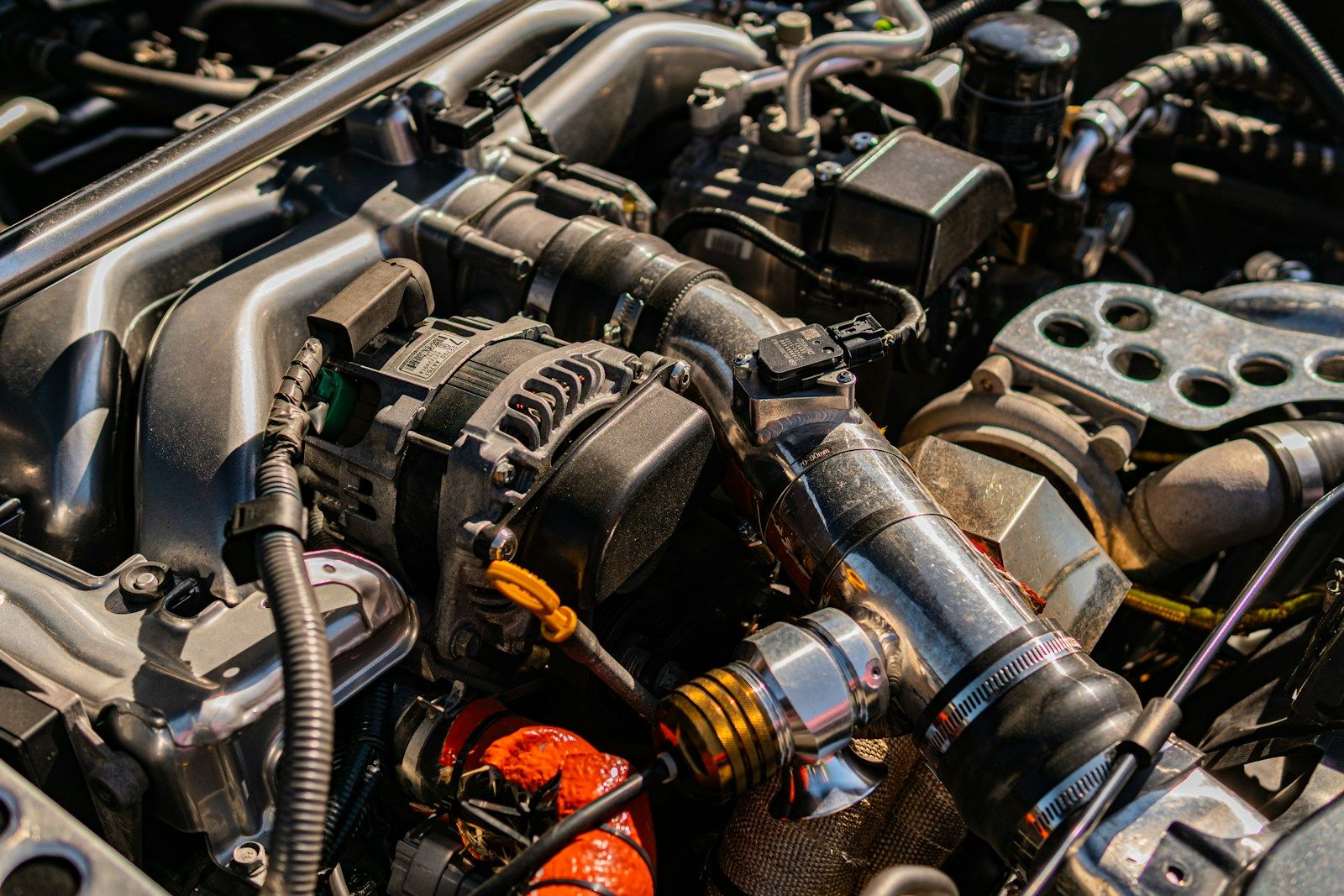
The reason is access. On a pickup with an easy starter, the job is under an hour. On a V6 minivan where the starter sits under the intake manifold, it can be six hours. Part price matters less than labor hours, so the first question to ask any shop is how many hours the book says your car takes.
What each source says a starter replacement costs
| Source and scope | Parts | Labor | Total |
|---|---|---|---|
| Jerry, typical | $180–$400 reman, $300–$600 new OEM | 0.7–6+ hr at $90–$140/hr (independent) | $296–$547 |
| Jerry, tight-access vehicles | Same range | 3–6+ hr | $900–$1,100 |
| AAA, whole range | Under $80 to $400+; $320–$540 for compact cars and sedans | $150–$300/hr in AAA network; 1–2 hr easy, up to 6 hr buried | $350–$1,200 |
| CarWhere, remanufactured, independent shop | $69–$176+ | 0.6–0.9 hr | $130–$310 |
| CarWhere, new aftermarket, independent shop | $80–$231 | 0.6–0.9 hr | $140–$365 |
| CarWhere, genuine GM part, dealer rate | About $163 | 0.6 (2WD) to 0.9 (4WD) hr at $125–$175/hr | $240–$320 |
What changes the price
Where the starter sits
AAA says labor hours determine most of what you pay. An easily accessible starter takes about 1 to 2 hours, and one buried under other parts can take up to 6. Jerry says an easy job, such as many GM LS V8 trucks, takes 0.7 to 1.2 hours. A difficult one, such as Honda and Toyota V6 minivans and SUVs or BMW inline-6 engines, takes 3 to 6 hours or more.
Type of starter
AAA notes that gear-reduction starters cost more than direct-drive units. Part choice matters too: Jerry lists new OEM at $300–$600 and quality remanufactured at $180–$400. AAA says parts run from under $80 to over $400, with luxury European cars above $600 for the part alone.
The shop
Jerry says independents run $90–$140 an hour and dealers $140–$200. AAA says shops in its network charge $150–$300 an hour. Same job, same car, a few hundred dollars apart. For scale, BLS reports a median technician wage of $24.34 an hour (May 2025), well under what shops bill per hour.
Labor time by how hard the starter is to reach
| Difficulty | Labor time | Examples from Jerry |
|---|---|---|
| Easier | 0.7–1.2 hr | Many GM LS V8 trucks, older Toyota rear-wheel-drive 4-cylinders |
| Medium | 1.5–3 hr | No examples given |
| Difficult | 3–6+ hr | Honda and Toyota V6 minivans and SUVs, BMW N52/N54/N55 inline-6, some Audi V6 |
Parts versus labor
AAA says labor is usually the larger share of the bill. Jerry's recent customer examples back that up for easy cars: part costs of $121–$294, labor of 55 to 65 minutes at about $97–$121, and totals of $239 to $399 across vehicles like a 2011 Chevrolet Camaro, a 2010 GMC Sierra 1500 and a 2016 Volvo XC60.
On a hard-to-reach engine the proportions flip. Using Jerry's numbers, three to six hours at $90–$140 an hour is $270 to $840 in labor alone, before a $180–$600 part.
CarWhere's independent-shop totals are lower still: $130–$310 for a remanufactured unit and $140–$365 for a new aftermarket one, assuming 0.6 to 0.9 hours of labor. Those labor times come from GM's bulletin for 2013 Silverado and Sierra trucks (0.6 hours 2WD, 0.9 hours 4WD) and Honda's bulletin for the 2013–16 Accord V6 (0.9 hours). They are accurate for those vehicles, but not a promise for yours.
Dealer, independent shop or chain
A dealer uses OEM parts and charges the higher rate. CarWhere's genuine GM starter for a Silverado came to $240–$320 at dealer rates, because the job takes under an hour and the part is about $163. That is a case where the dealer is not a rip-off.
On a car with a hard-to-reach starter, the dealer's higher hourly rate multiplies. Three hours at $140–$200 is $420 to $600, against $270 to $420 at $90–$140.
AAA's quote range is higher than Jerry's, partly because of the rates in its network. Use both as a gauge, not as a target. If a shop quotes $1,000 for a common sedan, ask for the labor hours and the part price separately. If it quotes $400 for an easy truck, CarWhere says that is about $35 above the top of the $365 new aftermarket range for easy cars.
Related repairs: which are real
Jerry lists the neighbors that can mimic a bad starter. A weak battery ($120–$300), corroded battery terminals ($25–$100), a bad ground strap or main cable (often under $150), and a faulty starter relay, ignition switch or neutral safety switch ($80–$350). Testing is $50–$150.
That list explains why the right sequence matters. Get the battery and cables tested, then the starter. Do not pay for a starter if a load test or voltage drop test would have shown a bad cable.
The real add-ons are small. A shop will often ask to clean or replace terminals, and AAA's symptoms list includes oil covering the starter, which suggests an engine leak worth tracing so the new starter does not get soaked too. Jerry also lists a flywheel ring gear at $800 or more, because the transmission has to come out. If the shop says the ring gear is damaged, ask to see the teeth.
A solenoid-only repair is mostly obsolete, per Jerry. It costs $120–$300 and applies to older fender-mounted solenoids on 1970s to 1990s Ford, GM and Chrysler models. Most current starters have the solenoid built in.
Signs it's the starter, and what to rule out
AAA's symptom list: slow cranking with the dash lights still on (rule out battery and alternator first), no crank but lights on, clicking or grinding at startup, a starter that keeps running after the engine starts, smoke, and oil on the starter.
Jerry gives a quick way to tell them apart. A single solid click with no crank means the solenoid engages but the motor does not turn, which points to the starter. Rapid clicking or dim lights often mean a weak battery or poor connections. Grinding on start suggests a gear mesh problem, and an intermittent no-start when hot suggests heat-related resistance inside the starter.
Before you commit, have the battery tested and the cables checked. Jerry says a starter can look dead when a $30–$100 terminal is corroded. And remember the alternator: a bad one drains the battery, which then fails to crank the starter.
Why the sources disagree
Three sources, three ranges. Jerry's $296–$547 comes from over 40,000 customer cases, so it reflects what people actually paid. AAA's $400–$1,200 reflects shops in its network, with labor at $150–$300 an hour. CarWhere's $130–$365 is derived from published parts prices on RockAuto and from GM and Honda service-bulletin labor times at $100–$150 an hour, which makes it a floor for easy vehicles rather than an average.
None of them is wrong. They describe different jobs. A GM truck with a 0.6-hour starter at $110 an hour has about $66 in labor. A V6 minivan with a 5-hour starter at $150 an hour has $750. Add a $150–$300 part to either and you get very different invoices from the same job description.
So use all three to bracket your quote. If a shop is under CarWhere's floor, ask what is missing from the quote. If it is above AAA's top figure of $1,200, ask for an itemized breakdown and a second opinion. Anywhere in between is a question of labor hours, and that is the number to check against the book.
What to expect by vehicle type
You cannot get an exact number without your vehicle, but the sources give a pattern.
Easy-access trucks and sedans
Jerry lists many GM LS V8 trucks and older Toyota rear-wheel-drive 4-cylinders at 0.7 to 1.2 hours. CarWhere's GM bulletin times for a 2013 Silverado or Sierra are 0.6 hours in 2WD and 0.9 in 4WD, and Honda's bulletin for the 2013 to 2016 Accord V6 is 0.9 hours. Total cost is in the $130–$400 range here, per CarWhere and Jerry's customer examples.
Compact cars and sedans in general
AAA puts the part at about $320–$540 for standard compact cars and sedans. Jerry's typical range of $296–$547 is the best single guide.
Luxury, V6 and V8 with a buried starter
Honda and Toyota V6 minivans and SUVs, BMW N52, N54 and N55 inline-6 engines and some Audi V6 engines take 3 to 6 hours or more, per Jerry. AAA adds that Toyota and Lexus V8s may require removing the intake manifold, and that luxury European cars can exceed $600 for the part alone. Expect $900–$1,100 or more.
If your car falls in that last group, a second quote is worth the phone call. The difference between shops can be several hundred dollars on labor alone.
Walking through the sample invoice
The sample invoice on this page has a remanufactured starter at $250, a starting-and-charging test at $75 and 1.5 hours of labor at $110, for $490. Every figure is inside a Jerry range: reman at $180–$400, diagnostics at $50–$150, medium-difficulty labor of 1.5 to 3 hours and independent rates of $90–$140 an hour. The total is just under the top of Jerry's typical $296–$547.
Two things to notice. First, the diagnostic is a separate line. A good shop credits it toward the repair, and Jerry lists the test at $50–$150 because battery and cable faults can mimic a bad starter. Second, the core charge is not on the invoice. Jerry says core charges of $30–$80 apply to DIY jobs, and a shop handles the old unit itself. If a core line shows up on a shop invoice, ask whether it is refundable.
What would make this invoice suspicious? Four hours of labor on a car the books rate at one, a part at the top of the OEM range on a car that does not need it, or a starter bundled with an alternator you did not ask about. Jerry lists the alternator at $350–$800, so an add-on like that is a big number to approve without a test.
How to read the quote
Ask for four items: the starter type (remanufactured, new aftermarket, OEM) and brand, the labor hours, the hourly rate, and the core charge. Jerry lists core charges of $30–$80 and CarWhere $30–$136, refundable when the old unit goes back. Jerry says core charges apply to DIY jobs, so a shop quote should not add a separate core line unless the shop is passing through its own deposit. If you see one, ask.
Labor hours should match the book for your engine. A quote of five hours on a V6 minivan is believable. Five hours on a 4-cylinder truck is not.
The brand spread is wide. CarWhere found a 2015 Camry starter from $79.79 (TYC) to $230.79 (Bosch). Brands Jerry mentions for quality remanufactured starters include Denso, Bosch, Mitsubishi Electric and BBB Industries. Ask which one the shop is using, and what the warranty is on parts and on labor.
Sample invoice
Sample invoice: starter on a mid-size sedan at an independent shop
- Remanufactured starter (core refunded on return)
- $250
- Starting and charging system test
- $75
- Labor, 1.5 hours at $110 an hour
- $165
- Total
- $490
An illustration built from Jerry's ranges: reman $180–$400, diagnostics $50–$150, medium-difficulty labor of 1.5–3 hours at $90–$140. It is not a quote and leaves out tax and shop supplies.
How to pay less
- Test the battery and cables first. Jerry lists terminals at $25–$100 and ground straps often under $150, much less than a starter.
- Ask for the book labor hours for your engine and compare shops on hours, not just total.
- Choose a quality remanufactured starter. Jerry puts reman at $180–$400 against $300–$600 for new OEM.
- Return the old starter for the refundable core ($30–$80 per Jerry, up to $136 per CarWhere).
- On an easy-access vehicle, compare against CarWhere's $130–$365 independent range before paying a dealer rate.
- Do not authorize flywheel work ($800+ per Jerry) without seeing the damaged teeth.
Questions owners ask
How much does it cost to replace a starter?
Jerry says $296–$547 for a typical car, with $900–$1,100 on tight-access vehicles. AAA says $400–$1,200. CarWhere's independent-shop checks on easy cars came to $130–$365.
Why is my starter quote so high?
Usually labor hours. AAA says a starter buried under other parts can take up to 6 hours, and Toyota and Lexus V8s may require removing the intake manifold. Jerry's tight-access range is $900–$1,100.
How do I know it's the starter and not the battery?
Jerry says a single solid click with no crank points to the starter, while rapid clicking or a slow crank points first to the battery. A free load test at a parts store checks the battery.
Can I replace a starter myself?
On an easy-access car, often. CarWhere puts DIY at $70–$230 for an aftermarket starter. On engines where the intake manifold has to come off, the job is better left to a shop.
Should I buy a remanufactured or new starter?
Quality remanufactured units from major brands are fine. Jerry lists $180–$400 reman against $300–$600 new OEM. Compare the warranty and ask whether it covers labor.
How long does a starter replacement take?
Jerry's range runs from about 0.7 to 1.2 hours on easy vehicles to 3 to 6 or more on difficult ones. AAA says 1 to 2 hours when the starter is easy to reach.
Sources
- How Much Does a Starter Replacement Cost?, Jerry, checked November 23, 2026typical range, tight-access range, part types, labor hours and rates, core charge, related costs, symptoms
- How Much Does a Starter Replacement Cost?, AAA, checked November 23, 2026AAA range, labor rates, hours, symptoms, price drivers
- Starter Replacement Cost (2026), CarWhere, checked November 23, 2026independent shop totals, part prices, GM and Honda labor times, core charges, DIY cost
- Why Won't My Car Start?, Jerry, checked November 23, 2026single click vs rapid clicking
- Automotive Service Technicians and Mechanics, U.S. Bureau of Labor Statistics, checked November 23, 2026median technician wage, May 2025